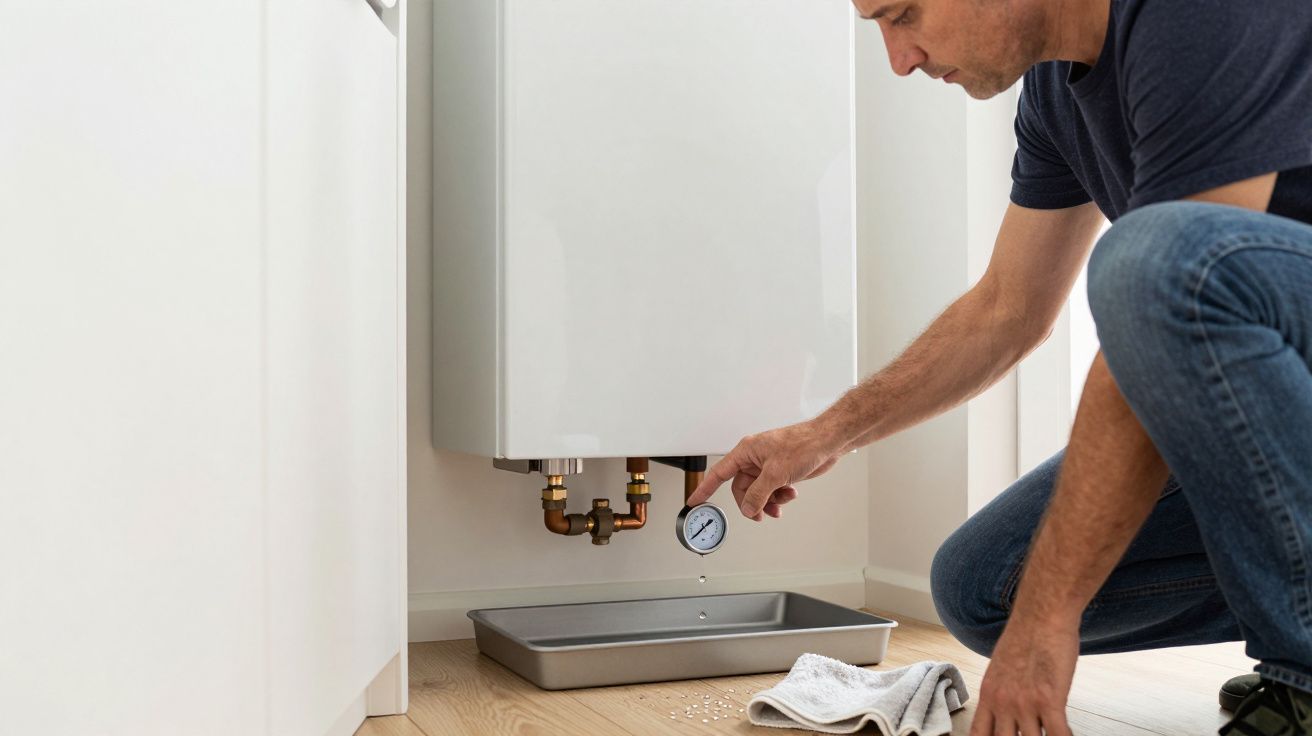
Boiler servicing is meant to make your heating safer and more reliable, yet some boilers choose the worst possible moment to give up: the first cold night after the visit. When that happens, human error is often part of the story-not always negligence, but small, ordinary mistakes made under time pressure in a cramped cupboard. Understanding why “it was fine before the service” can help you respond calmly, ask better questions, and avoid repeat breakdowns.
The awkward truth is that servicing doesn’t only maintain a boiler. It also disturbs it. Panels come off, wires are moved, seals are stressed, settings are checked, and components that were limping along quietly get exposed.
The paradox: a service can reveal a fault, not create one
Many post-service failures aren’t caused by the engineer “breaking” something. They’re caused by a system that was already on the edge.
A worn fan might spin when warm but stall from cold. A sticking diverter valve might only show itself once it’s exercised. A marginal ignition electrode might spark just enough, until it’s cleaned and refitted a millimetre out.
Servicing can be the first time in months your boiler has been properly inspected, opened, tested and pushed through its full cycle. That attention is exactly what exposes weaknesses.
The “disturbance” factor is real
Boilers live in dusty, humid, awkward spaces. Components settle into position over years of vibration and heat. When you remove covers, disconnect tubes, or pull a burner to clean it, you’re resetting that settled equilibrium.
That’s why a boiler can appear to fail “because of the service”, when it’s really failing “after being moved and tested like it should have been all along”.
Where things go wrong: the small human mistakes that matter
Most servicing errors are not dramatic. They’re the kind you only notice when the boiler refuses to fire and the house goes cold.
Common slip-ups that can stop a boiler working
- A plug, sensor, or earth lead not seated fully after refitting.
- A condensate trap not reassembled correctly, causing a blockage or internal leak.
- A case seal pinched or misaligned, affecting room-sealed combustion and triggering safety shutdowns.
- A boiler pressure left low after bleeding radiators or draining a little water for checks.
- A gas valve adjustment touched unnecessarily or not returned to spec after testing.
- A flue integrity issue missed-or created by not refitting clamps and seals properly.
None of these are exotic. All of them can happen when someone is interrupted, rushing, working by torchlight, or juggling paperwork and parts.
Settings and controls: easy to change, easy to overlook
Modern boilers have installer menus, parameters, and diagnostic modes. A service sometimes involves entering these to check performance.
If something is left in test mode, or a control setting is altered without being explained, the boiler can behave oddly afterwards: short-cycling, lockouts, hot water going tepid, heating not responding to the thermostat.
The boiler hasn’t become “temperamental”. It’s doing exactly what it’s been told to do-just not what you wanted it to do.
The repeat villain: pressure, air, and the first heat-up after the visit
A huge chunk of post-service call-backs are basic system-side issues rather than the boiler itself. They tend to show up the first time the heating runs hard for an hour.
Why pressure drops right after a service
Topping up pressure is simple; keeping it stable is harder. After a service, pressure can fall because:
- Radiators were bled and air worked loose later, dropping pressure again.
- A tired expansion vessel can’t cope with heating cycles, causing pressure swings.
- A pressure relief valve starts weeping after being lifted by high pressure.
- A tiny leak appears at a joint that was disturbed, then only shows when hot.
If you look at the gauge the next morning and it’s near zero, that doesn’t automatically mean “bad service”. It means the system is telling you it’s not sealed as well as you thought.
Condensate problems often masquerade as “it died overnight”
In cold weather, condensate pipework is a frequent culprit. A service can coincide with a cold snap, making the timing look suspicious.
If the condensate pipe freezes or the trap blocks, the boiler may lock out with a fault code, often after running fine immediately post-service.
When it really is the service: how to spot a likely workmanship issue
You don’t need to play engineer. You just need a few clues that point towards something left undone.
Signs it’s worth calling them back promptly
- The boiler worked consistently before, then fails immediately after (same day) with no other changes.
- You notice new water marks, drips, or a damp patch under the boiler.
- The casing looks refitted oddly, or you hear rattling/vibration that wasn’t there.
- A control or programmer is set differently and nobody mentioned it.
- There’s a smell of fumes or you feel unwell when it runs (treat this as urgent).
If you suspect anything combustion-related-fume smell, soot, alarms-turn the boiler off and contact a Gas Safe registered engineer.
What to do in the moment (without making it worse)
When a boiler fails right after a service, most people do the same three things: reset it repeatedly, panic-Google the error code, and start undoing panels. Two out of three are bad ideas.
Here’s a calmer sequence that keeps you safe and gives the engineer usable information:
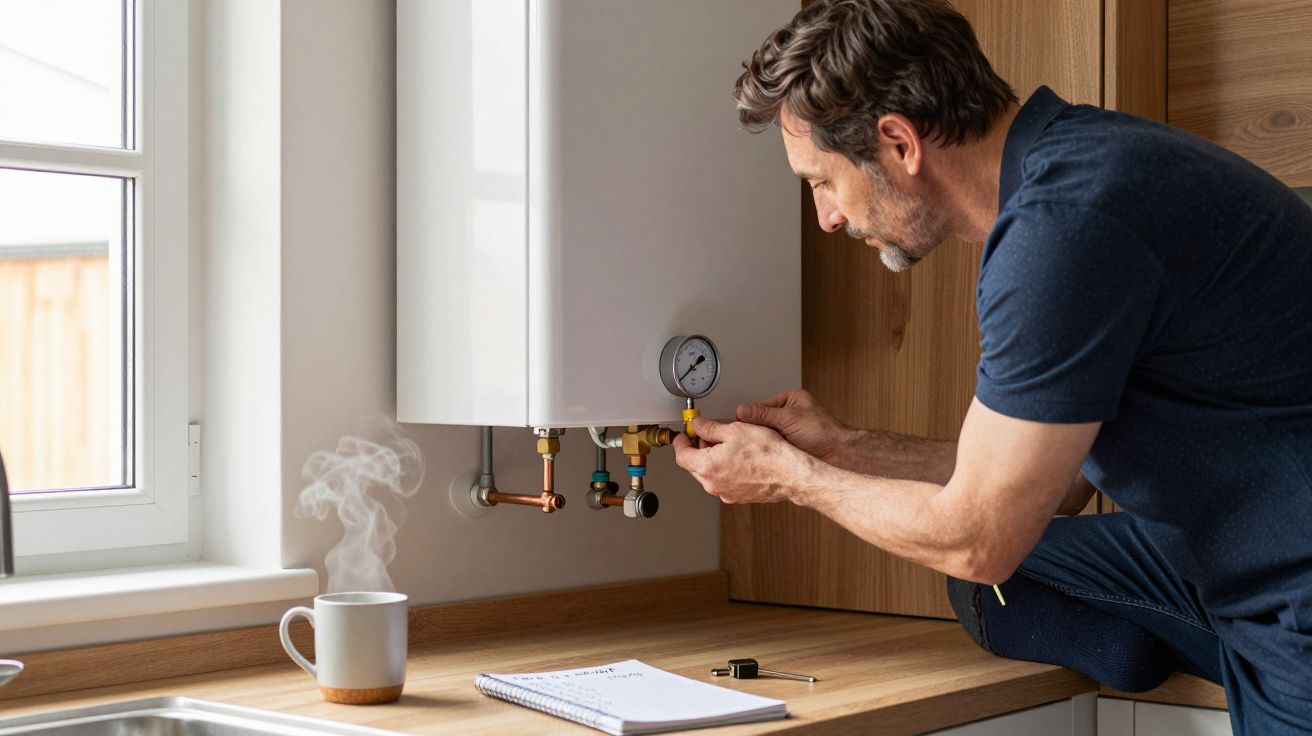
- Check the pressure gauge (often the simplest fix). If it’s low, top up using the filling loop only if you know how and it’s safe to do so.
- Look for obvious leaks under the boiler and around nearby pipework.
- Note the fault code and what the boiler was doing when it happened (hot water, heating, both).
- Try one reset, then stop. Repeated resets can mask the pattern and stress components.
- Call the company who serviced it and describe symptoms, not theories.
“It’s showing EA after trying to fire twice” helps more than “you must have broken the pump”.
How to reduce the risk next time: a better handover, not more luck
A good service ends with a good handover. That’s where many frustrations are born: the engineer leaves, the boiler is technically safe, but you don’t know what was changed, tested, or flagged.
A quick checklist to ask before they go
- Can you show me the pressure now, and what range it should sit in?
- Did you open/clean the condensate trap, and is the condensate pipe protected from freezing?
- Were any parts borderline (fan noise, expansion vessel charge, PRV weep, flue seals)?
- What tests were done (combustion analysis, tightness test where applicable)?
- If it fails tonight, what’s the best number to call and is it covered as a call-back?
These questions aren’t confrontation. They’re clarity. And clarity is what stops that sinking feeling at 6am when the radiators are cold.
The bigger picture: habits, not hacks
People love a neat villain: “servicing ruins boilers” or “engineers always mess it up”. Reality is duller and more useful. Boilers fail after servicing because the system was fragile, because disturbance reveals weakness, and because humans sometimes miss small steps.
Regular servicing still matters: safety checks, early detection, and efficiency all improve when it’s done properly. The goal isn’t to avoid services. It’s to make them more thorough, better communicated, and followed by a quick real-world test run-heating on, hot water on, pressure checked-before the door closes.
FAQ:
- Should I stop using the boiler if it fails after a service? If there’s any smell of fumes, soot, or a carbon monoxide alarm activates, turn it off and seek urgent help from a Gas Safe registered engineer. If it’s a simple lockout with no safety signs, note the fault code and contact the servicing company.
- Is a call-back usually free? Many companies treat immediate post-service issues as a call-back, but policies vary. Ask at booking time and keep the service paperwork.
- Could the service have caused a leak? Yes. Joints, seals, and the condensate trap can start leaking if disturbed or refitted incorrectly, but leaks can also appear coincidentally once the boiler is cycled and heated properly.
- Why does it fail at night rather than straight away? Night-time often means colder temperatures (condensate freezing), longer heating runs (pressure swings), and the first full heat-up since the boiler was opened and reassembled.




Comments (0)
No comments yet. Be the first to comment!
Leave a Comment