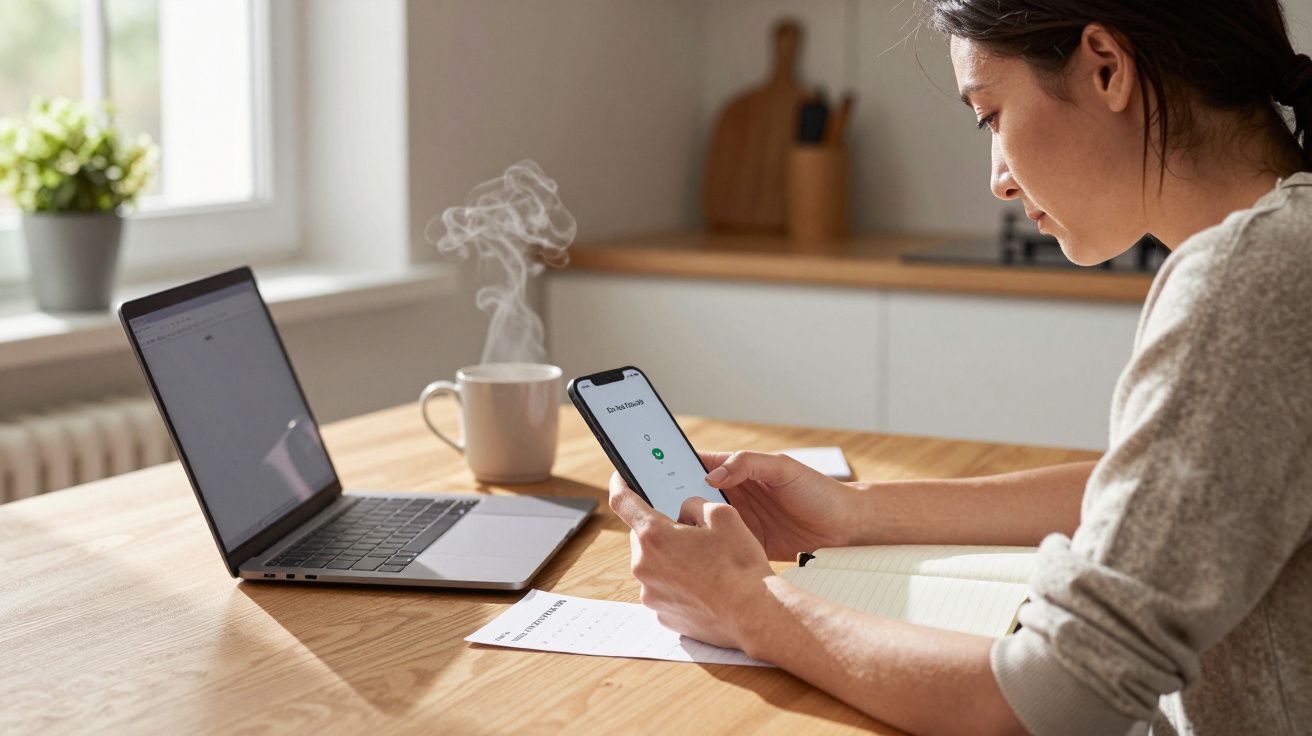
You notice it in the smallest places: the moment you open a chat and your thumbs stall. In translation tools and help desks, the phrase “certainly! please provide the text you'd like me to translate.” sits beside “of course! please provide the text you would like me to translate.” as a polite bridge into action, but for a tired brain it can feel like one more prompt to answer, one more choice to make. That’s why decision fatigue matters now: it’s no longer just about big life choices, but about the constant micro-decisions that leak your attention all day.
The lift doors close, someone asks what you want for dinner, and your mind goes blank in a way that feels personal. It isn’t. It’s throughput.
By the time you reach the end of the day, your willpower hasn’t “failed” so much as been spent in coins you didn’t notice dropping: which notification to clear, which tab to keep, whether to reply now or later, whether that message needs an emoji, whether you should start laundry before or after the call. The modern day is designed to turn you into a small, continuous decider.
Decision fatigue is accelerating, not just spreading
Decision fatigue used to be framed as a peak-performance problem: judges making harsher rulings late in the day, executives eating the same lunch to save cognitive fuel. Now it’s a consumer interface and a workplace default. You’re asked to decide in more places, at higher frequency, with more social risk attached.
What’s changed fastest is the decision density. Work has become more asynchronous, tools have become more customisable, and everyday life has been productised into a menu. Even rest arrives with options: which meditation, which playlist, which sleep tracker, which “routine” you can optimise.
The result is that fatigue shows up earlier, and it looks less like exhaustion and more like drift. You still do things, but they’re reactive. You click whatever is closest to “fine” and tell yourself you’ll do the thoughtful version tomorrow.
The hidden culprit: micro-choices with social weight
Not all decisions cost the same. A surprising number of your daily micro-decisions are also relationship decisions, and that’s where the burn happens. “Should I reply now?” is rarely about time; it’s about what your reply signals.
Consider the soft pressure built into everyday platforms:
- Read receipts and typing bubbles turn timing into a statement.
- Multiple channels (email, chat, texts, DMs) create parallel inboxes with different etiquette.
- “Quick reactions” and templates save time, but create a new choice: which one is safest.
- Endless settings (notifications, filters, focus modes) ask you to become your own systems engineer.
By lunchtime, you’ve made dozens of tiny calls about availability, tone, and priority. You’re not just deciding what to do-you’re deciding who you are to other people in real time.
What it does to your brain and your behaviour
Decision fatigue doesn’t always look dramatic. Often it looks like harmless procrastination, messy spending, and low-grade irritability. The most common shift is that you stop choosing based on values and start choosing based on friction.
People slide into patterns that feel “out of character”, but are actually predictable:
- You default to whatever is already open.
- You avoid tasks with unclear endpoints, even if they matter most.
- You seek novelty (scrolling, snacking) because it feels like a break without requiring planning.
- You say “yes” to end a conversation, then resent it later.
The cruel part is the feedback loop. The more fatigued you are, the more you delay. The more you delay, the more decisions stack. The stack itself becomes the stressor.
How to make the impossible boring enough to work
The fix is not to “be more disciplined”. Discipline is a decision, too. The practical move is to reduce decision count, reduce decision timing, and reduce decision ambiguity.
Start with one small rule you can keep for a week, not a life overhaul:
- Create a default. Pick a standard lunch, a standard workout slot, a standard “shutdown” time. Defaults are not dull; they are fuel.
- Move decisions earlier. Decide tomorrow’s first hour before you end today. Morning is expensive cognitive real estate.
- Batch the maybes. Keep one note called “Not now” and dump open loops there. Review once per day, at a set time.
- Limit active projects. Choose a hard cap (e.g., three). Everything else is parked, not secretly running in the background.
- Use language that closes loops. “I can’t today, but I can on Thursday at 3” turns a vague decline into a finished decision.
If you need a concrete cue: when you feel yourself “hovering” between options, that’s your signal to default, defer, or delete. Not forever-just long enough to protect your bandwidth.
“Clarity is a kindness,” a team lead told me after switching their group to fewer channels. “It didn’t make us slower. It made us less tired.”
A quick audit you can do in ten minutes
Open your calendar and your messaging apps. You’re looking for decision leaks: places where you’re forced to decide repeatedly because the system has no rule.
Ask:
- Where do I decide the same thing more than twice a week?
- Which conversations keep reopening because nothing is being finalised?
- Which notifications are “FYI” but still interrupting me?
- Which tasks feel heavy mainly because the next step isn’t defined?
Pick one leak and plug it with a rule. Not a mood, not a resolution-a rule you can follow even when you’re tired.
The new skill: designing your day like a system
The people adapting fastest aren’t superhuman. They’re treating decision-making like a limited resource and building guardrails around it. They don’t rely on motivation; they rely on setup.
A workable day now looks less like freedom and more like choreography: fewer entrances, fewer exits, clearer hand-offs. It can feel uncool at first, like you’re becoming rigid. Then you notice that you’re calmer, and your best decisions happen where they should: on the work that actually needs you.
| Shift to make | What it replaces | Why it helps |
|---|---|---|
| Defaults | Daily “what should I do?” | Cuts decision volume without cutting quality |
| Batching | Constant checking | Protects attention and reduces social pressure |
| Clear next steps | Vague intention | Lowers friction and stops re-deciding |
FAQ:
- What is decision fatigue, in plain terms? It’s the drop in decision quality and self-control after making too many choices, especially under time pressure or social scrutiny.
- Why does it feel worse now than a few years ago? More tools, more channels, more customisation, and more always-on expectations have increased the number and emotional weight of micro-decisions.
- Is the goal to eliminate choices? No. The goal is to protect your best thinking for the decisions that matter, by using defaults and rules for the repetitive ones.
- What’s one change that helps quickly? Decide tomorrow’s first hour before you end today, and keep notifications off during that hour. You’ll feel the difference within days.
- How do I know if a “rule” is working? You stop hovering. You start finishing. You feel less resentful about small asks because your boundaries are clearer and easier to keep.





Comments (0)
No comments yet. Be the first to comment!
Leave a Comment