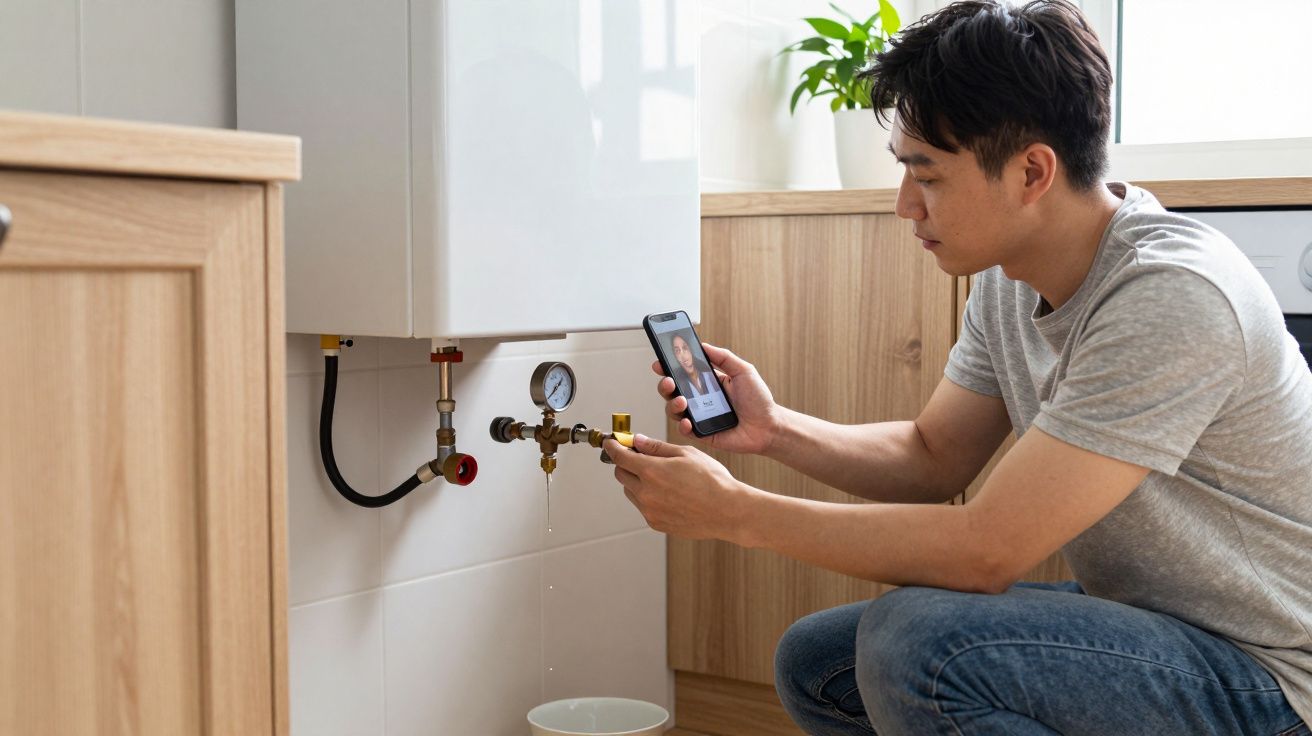
It rarely starts with a dramatic bang. Emergency boiler repairs often begin as a small discomfort you ignore for a week, even though the early warning signs were sitting in plain sight in your kitchen, hallway cupboard, or utility room. The frustrating bit is that most breakdowns aren’t “sudden” at all; they’re the end of a short, predictable chain.
I’ve heard the same story in different houses: a bit of noise, a bit of pressure loss, a radiator that feels oddly lukewarm, and then-on the coldest morning-nothing. The boiler doesn’t fail out of spite. It fails because one small signal wasn’t treated as information.
The one warning sign that shows up before most breakdowns
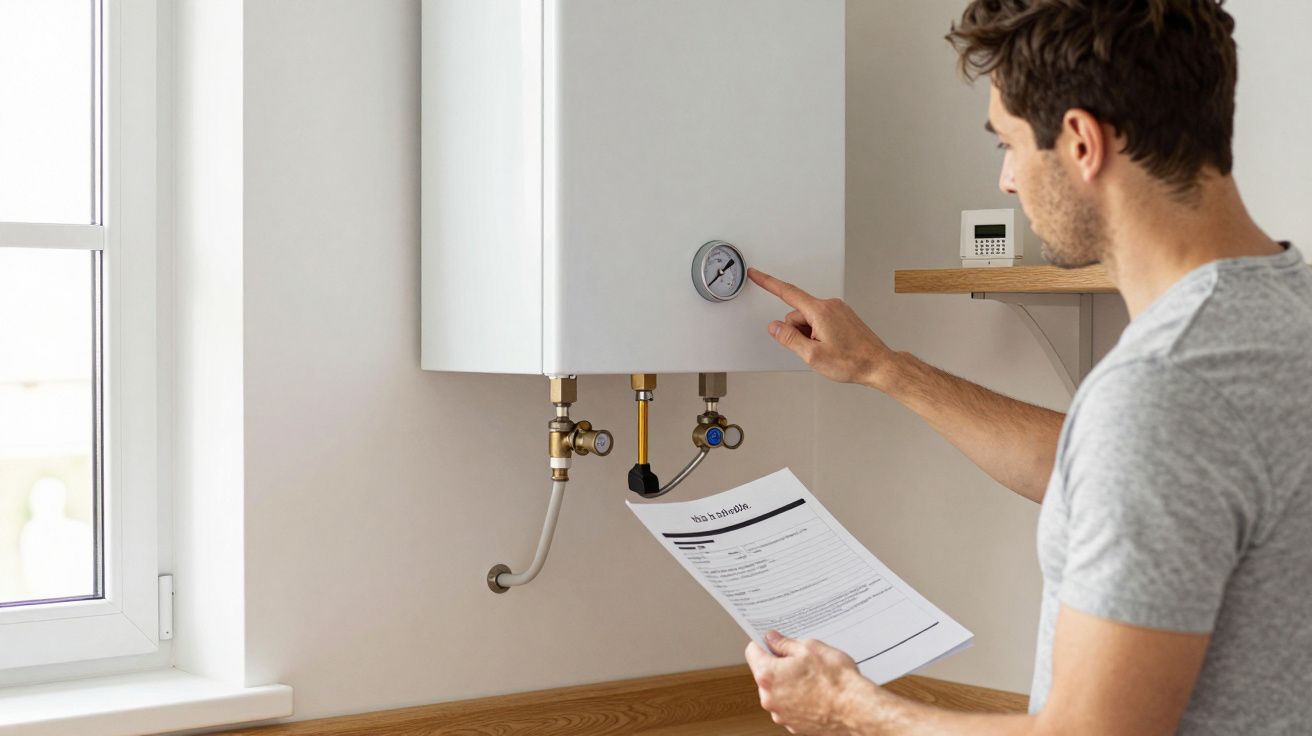
If you forced me to pick one early warning sign that links to a huge number of emergency call-outs, it would be this: unexplained pressure drop.
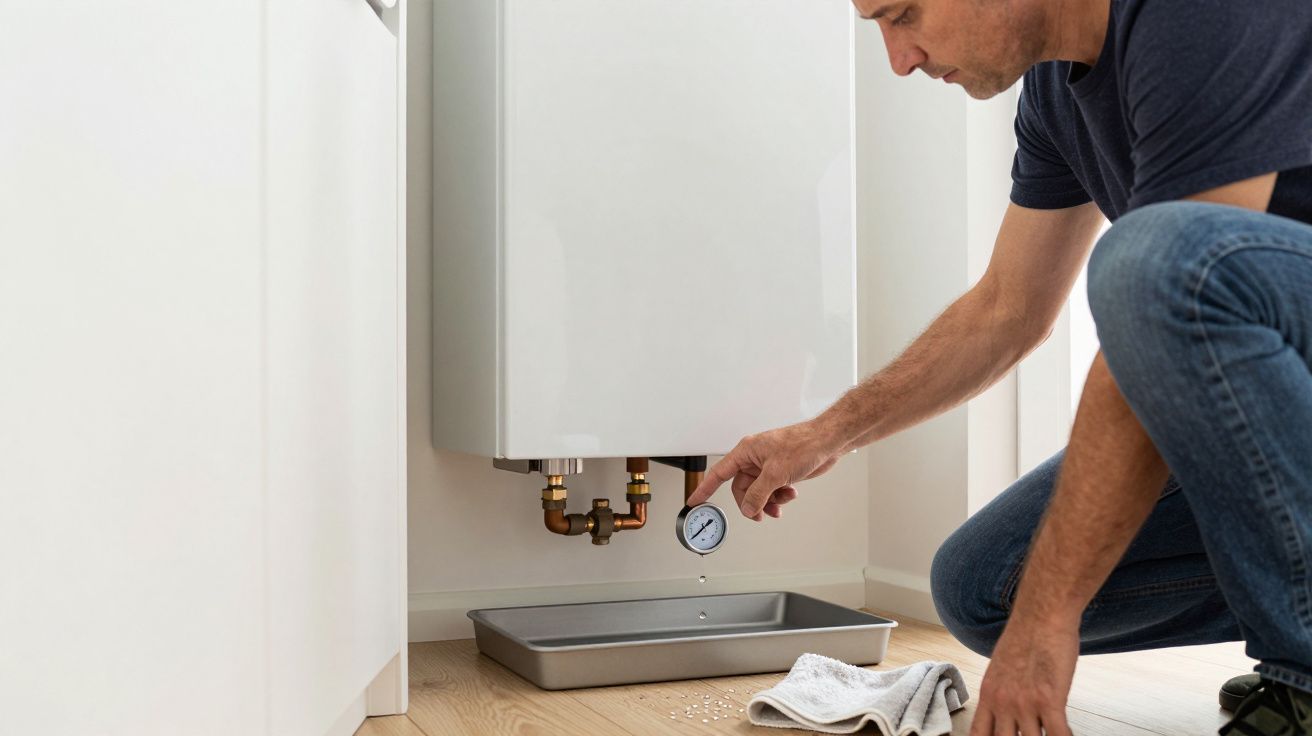
Not the “I bled a radiator and the pressure dipped, fair enough” kind. The nagging kind where you top it up, it’s fine for a day or two, then the needle slides down again. People treat it like a minor nuisance, when it’s often your boiler telling you something is leaking, expanding badly, or being pushed into unsafe operating conditions.
Pressure is the system’s quiet language. When it can’t hold steady, the boiler tends to cycle awkwardly, lock out, or overheat and shut down to protect itself. That’s when a quick check becomes an emergency.
Why pressure loss creates emergency boiler repairs so quickly
A boiler can tolerate a lot, but it can’t tolerate being run outside its normal range for long. Low pressure reduces flow through the system, which can trigger overheating and safety lockouts. If the boiler is trying to fire without stable circulation, it starts to behave like a car repeatedly driven with too little oil: maybe it still runs, but the wear accelerates.
The emergency part usually arrives as a cascade. You’re topping up more often, so fresh water enters the system, which can introduce oxygen and speed up corrosion in older setups. The boiler then works harder to hit temperature, the pump strains, and any weak component gets exposed.
A lot of householders only clock the seriousness when they see an error code. By then, the boiler has already been operating under stress for days or weeks.
What’s usually behind the drop (and what it looks like at home)
Pressure doesn’t disappear for no reason. The challenge is that the “reason” is often subtle enough that you don’t connect it to the boiler.
Common culprits include:
- A small leak on a radiator valve or pipe joint that evaporates or stains slowly rather than puddling.
- A leaking pressure relief valve (PRV), sometimes visible as moisture or dripping from the copper pipe outside.
- An expansion vessel issue (loss of air charge or failed diaphragm), where pressure rises when heating, then dumps water via the PRV.
- A filling loop left slightly open, causing odd pressure behaviour and sometimes triggering discharge.
- A hidden leak under floors (rarer, but it happens), where the first clue is repeated top-ups.
A simple pattern to watch: if the pressure climbs high when the heating is on, then drops later, that points you towards expansion control and relief discharge rather than a random radiator weep. If it just steadily drifts down whatever you do, think leak first.
The “two-day test” that saves people a call-out
You don’t need to be an engineer to gather useful information. You just need to observe like one.
Try this simple check over 48 hours:
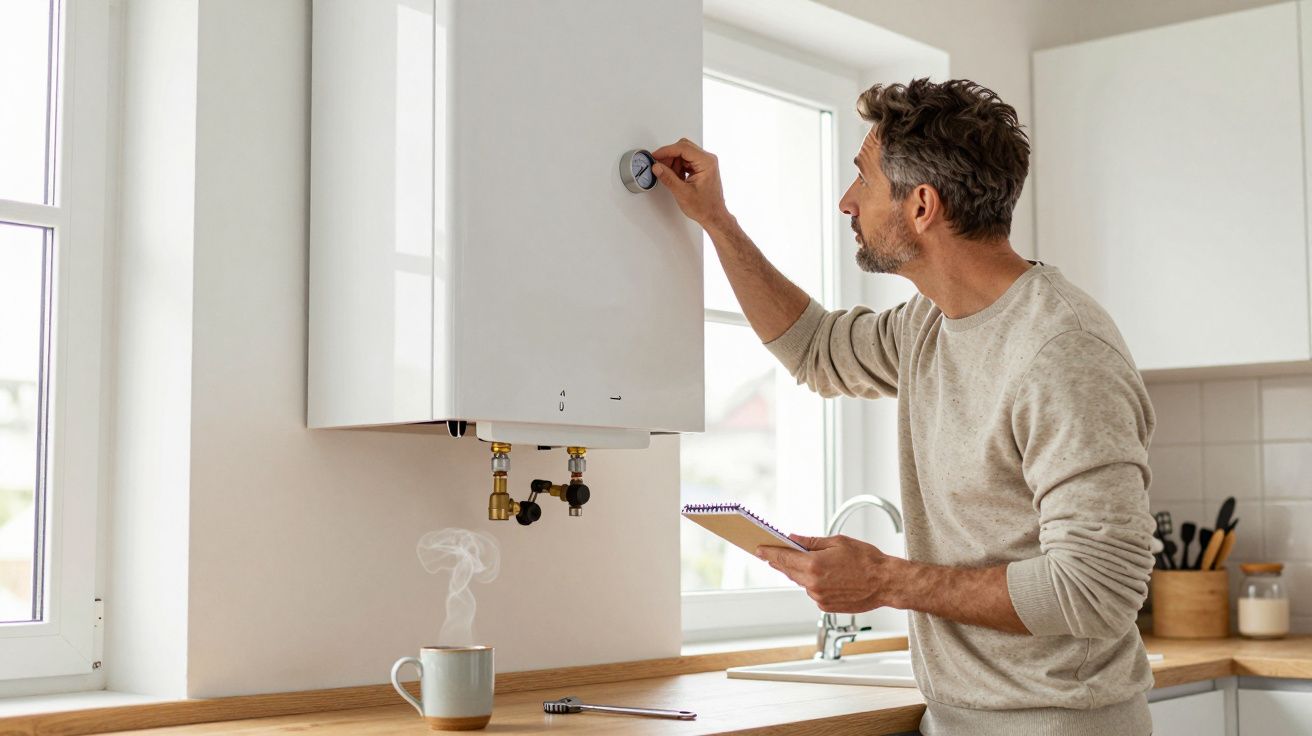
- Note the pressure cold (first thing in the morning, heating off).
- Put the heating on for 20–30 minutes and note the pressure hot.
- Turn everything off, let it cool, then note the pressure cold again later.
What you’re looking for isn’t perfection; it’s a story. A healthy system will rise a bit when hot and return close to where it started. A system heading for trouble will show extremes (rising too high), or steady drift (dropping cold-to-cold), or both.
If you’re topping up daily, you’re no longer “maintaining” the boiler. You’re compensating for a fault.
Other early warning signs that often travel with it
Pressure drop is the headline, but it usually brings friends. These early warning signs tend to appear in the same window before a breakdown:
- Gurgling radiators or frequent bleeding needs (air entering, poor circulation, or water quality issues).
- Banging/knocking (kettling), especially on hot water demand (often limescale or restricted flow).
- Radiators hot at the top but cold at the bottom (sludge, balancing, or circulation problems).
- Boiler short-cycling (turning on and off rapidly), which increases wear and can indicate flow/pressure issues.
- A discharge pipe outside dripping when the heating is on (PRV activity-never “normal” as a long-term state).
One sign alone can be ambiguous. Two or three together is your boiler waving both arms.
When to stop troubleshooting and book help
There’s a difference between being sensible and being stuck in a loop of resets and top-ups. A good rule: if you’ve had to intervene more than once in a week, it’s time to get it checked before it becomes urgent.
Book a professional promptly if:
- Pressure drops repeatedly and you can’t find an obvious leak.
- The pressure rises towards the upper end of the gauge when heating is on.
- The outside discharge pipe is wet or dripping.
- The boiler locks out repeatedly or shows persistent fault codes.
And if you smell gas, feel unwell with headaches/nausea, or suspect carbon monoxide: stop, ventilate, and contact the appropriate emergency services and a Gas Safe engineer. That’s not a “wait and see” category.
A quick comparison guide: nuisance vs. warning
| What you notice | Likely category | What to do next |
|---|---|---|
| Pressure dips after bleeding one radiator | Nuisance | Top up once, recheck over 24 hours |
| Pressure drops every couple of days | Warning | Look for leaks, check discharge pipe, book a check |
| Pressure shoots up when heating runs | Warning | Stop topping up repeatedly; expansion/PRV likely needs attention |
The practical takeaway: treat pressure like a smoke alarm, not a speed bump
Most households don’t end up needing emergency boiler repairs because they missed a service date by a month. They need them because the boiler gave a consistent, low-effort signal-pressure instability-and it was normalised as “one of those things”.
If you remember one habit, make it this: glance at the pressure gauge when you walk past. Not obsessively. Just enough to notice when the system’s baseline changes, before the boiler turns a small fault into a no-heat crisis.
FAQ:
- Is it normal for boiler pressure to drop slightly over time? A tiny change can happen, but needing frequent top-ups isn’t normal. Repeated pressure loss usually indicates a leak or a component issue.
- What pressure should my boiler be at? It varies by system, but many sit around 1–1.5 bar when cold. Check your manual; the key is stability, not chasing a “perfect” number.
- Can I keep topping up the boiler to avoid a breakdown? Topping up may restore heat temporarily, but it can mask the fault and sometimes worsen corrosion or trigger further issues. If you’re topping up often, book an inspection.
- What does it mean if the pressure rises a lot when the heating is on? That commonly points to expansion vessel problems or a pressure relief issue. It’s a strong indicator to get it checked before it becomes an emergency.
- How can I tell if water is discharging outside? Look for the copper pipe that exits through an external wall (often near the boiler location). If it’s dripping during heating, it’s a sign the system is relieving pressure and needs attention.


Comments (0)
No comments yet. Be the first to comment!
Leave a Comment