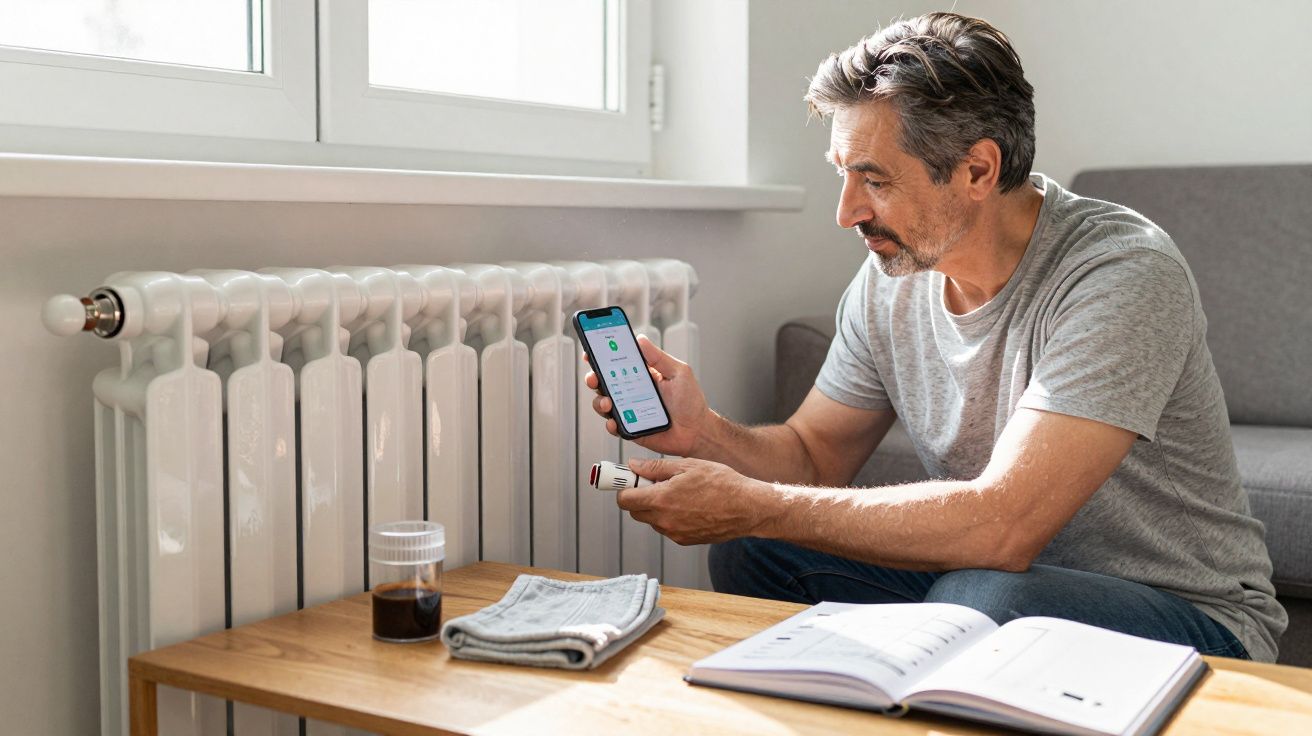
It often begins with a perfectly reasonable upgrade. You hear about low-carbon heating, you look at your bills, and you picture a quieter home that isn’t tied to gas prices. Then the installer asks a few questions about system compatibility-radiators, pipework, controls-and suddenly your “simple swap” starts sounding like a whole-house investigation.
That’s not bad luck. It’s the point. Low-carbon heating doesn’t just warm your rooms; it shines a bright light on the parts of older heating systems that have been getting away with it for decades.
The moment the new heat meets the old house
Most traditional boilers are generous. They push out high-temperature water, recover quickly, and mask all sorts of shortcomings: undersized radiators, sloppy balancing, sticky valves, and controls that are basically “on” and “off” with a clock.
Heat pumps, and many other low-carbon setups, are less forgiving. They work best when they can cruise steadily at lower flow temperatures. That one detail-temperature-turns minor quirks into major performance issues.
You don’t notice any of this when a gas boiler is blasting 70°C water through the system. You do notice it when the system is trying to deliver comfort with 35–50°C and your living room starts feeling like it’s negotiating.
Why low-temperature heat is a stress test
The physics is simple, but the experience isn’t. A radiator’s heat output depends heavily on the temperature difference between the radiator and the room. Drop the flow temperature and the radiator has less “oomph” unless it’s bigger or the home needs less heat.
That’s why people sometimes describe a heat pump as “it’s on all the time”. It can be. The system is designed to hold the house at a steady comfort level, not do short aggressive bursts. In a well-matched home, that feels luxurious. In a poorly matched one, it feels like something’s wrong-even if the unit is doing exactly what it was designed to do.
A quick rule of thumb: older systems were often built around high output, short runs. Low-carbon heating prefers lower output, longer runs. If your home and emitters were never set up for that rhythm, the mismatch shows up fast.
The compatibility tripwires hiding in plain sight
When people talk about system compatibility, they often picture one big hurdle. In reality it’s a pile of small ones, each harmless on its own, but collectively expensive in comfort and efficiency.
Common weak points that low-carbon heating exposes include:
- Radiators sized for boiler temperatures: fine at 70°C, underwhelming at 45°C.
- Poor hydraulic balance: one room gets all the flow, another starves, and you chase the thermostat like it’s personal.
- Old or mixed pipework: narrow microbore runs, long dead legs, or awkward branches that make steady flow harder.
- Controls that fight the system: legacy thermostats, aggressive on/off schedules, or multiple zone valves that cause short cycling.
- Sludge and magnetite: the quiet villain that reduces heat transfer, clogs strainers, and kills performance.
- Insulation gaps: not a heating-system component, but the number one reason low-temperature heat feels “weak”.
None of these is glamorous. That’s why they get ignored-until a newer system turns them into front-page news.
The old-boiler habits that don’t translate
There’s also a human layer. Many households are used to “boosting” the heating: crank it up, feel the rush, turn it down. That behaviour makes sense with a boiler that’s cheap to install and designed for rapid response.
With low-carbon heating, the better habit is boring: keep setpoints steady, let the system run gently, and avoid big setbacks that force it into recovery mode. The house becomes more like a slow, stable ship than a speedboat.
If that sounds unappealing, it’s usually because the home is leaky or the emitters are marginal. People blame the technology when the real issue is that the system was never asked to be efficient before.
What “a good install” actually means now
A heat pump (or any low-carbon system) can be excellent, but only if the basics are treated as essentials rather than optional extras. The good news is that the fixes are mostly known, and they’re mostly not magic.
A competent upgrade process usually includes:
- Heat loss calculation per room, not a vibe-based estimate.
- Emitter check: radiators and/or underfloor heating sized for realistic flow temperatures.
- Pipework and flow assessment: ensuring the system can deliver the required flow rates.
- Cleaning and protection: flush if needed, magnetic filtration, inhibitor.
- Controls tuned for steady operation, with weather compensation where appropriate.
- Commissioning that isn’t rushed: balancing, checking ΔT, and verifying performance in real conditions.
This is where older systems get exposed. They were often installed to “work”, not to be measured. Low-carbon heating is less tolerant of guesswork because its efficiency lives in the details.
The uncomfortable truth: it’s not always the heat pump
There’s a specific kind of disappointment that happens when someone spends serious money and the house doesn’t feel instantly transformed. The temptation is to decide the whole idea is overhyped.
Sometimes, yes, a unit is poorly specified or installed. But just as often, low-carbon heating is doing its job and revealing that the home’s underlying heat demand is higher than anyone wanted to admit. Draughts, thin loft insulation, uninsulated floors, leaky glazing, and chimneys that quietly ventilate your living room all night-none of that cared when cheap high-temperature heat was available.
Now it cares. And you notice.
A quick compatibility snapshot
| Area | Older systems often assume | Low-carbon heating works best with |
|---|---|---|
| Heat delivery | High-temp, fast response | Lower-temp, steady output |
| Controls | On/off schedules | Modulating, weather-led control |
| Distribution | “Good enough” balance | Correct flow rates and balancing |
What to do if you’re planning the switch
If you’re considering low-carbon heating, treat the project like a system upgrade, not an appliance swap. That mindset alone saves a lot of grief.
Practical steps that tend to pay back:
- Ask for a room-by-room heat loss and radiator outputs at the proposed flow temperature.
- Budget for system prep (cleaning, filters, commissioning) as standard, not as an upsell.
- Prioritise draftproofing and insulation before you chase bigger hardware.
- Be wary of promises that it will feel identical to a boiler without any other changes.
- Request an explanation of how the controls will be set up, in plain English.
Low-carbon heating can be a genuine upgrade in comfort and cost stability. It just demands honesty about system compatibility-because it’s no longer possible to hide the weak bits behind a blast of heat.
FAQ:
- Will I definitely need new radiators for low-carbon heating? Not always, but many homes need at least some upgrades or resizing if the system is designed to run at lower flow temperatures.
- Why does my house feel cooler even though the heating is “on”? Low-temperature systems often heat more gently and steadily; if the home is leaky or emitters are undersized, the heat can’t get into the rooms fast enough to maintain comfort.
- Is the issue my old pipework or the new system? It can be either, but flow rate and balancing problems in older pipework become more obvious with heat pumps, because steady circulation matters more.
- What’s the single most important thing for compatibility? A proper heat loss calculation and an emitter design that matches it. Without that, everything else is guesswork.
- Can I improve performance without major building work? Often, yes: balancing, controls tuning, system cleaning, and targeted radiator upgrades can make a big difference even before insulation projects.




Comments (0)
No comments yet. Be the first to comment!
Leave a Comment