The first cold snap never arrives politely. It slips under the skirting board, finds the draught you forgot about, and turns the hallway into a fridge. In older properties, even good central heating systems can feel like they’re running just to stand still - and that matters when your bills, comfort, and damp risk all peak at once.
You might blame the boiler, or the weather, or your own laziness about “that window”. Usually it’s none of those, exactly. Winter simply exposes how a house was built to breathe, bend, and shed heat in a different era.
Winter finds the weak points fast
Older homes don’t fail in a dramatic way. They leak, steadily. Warm air drifts up and out through loft hatches, chimneys, unsealed floorboards and original sash frames, while cold air pushes in wherever it can.
That wouldn’t be such a problem if the building fabric stopped it. Many older properties have solid walls with no cavity, suspended timber floors with vents, and roofs that were never designed to be tightly sealed. The result is a structure that loses heat faster than modern builds - and feels colder even when the thermometer says it “should” be fine.
You notice it in small scenes: the radiator is hot but the sofa is cold; the bedroom is fine until 3am; the corners of the room feel wet. None of this is imagination. It’s physics meeting old detailing.
The building was meant to “breathe” - until modern life moved in
A lot of older homes were designed around open fires and constant air change. Moisture from cooking, bathing, drying clothes and breathing was expected to escape through chimneys, leaky joinery and porous materials like lime plaster.
Then we changed the rules. We fitted double glazing, blocked fireplaces, added thick paints, sealed up vents, and started drying laundry indoors because it’s raining again. When you reduce ventilation without managing moisture, water vapour stays in the house, cool surfaces collect it, and condensation becomes a regular winter visitor.
That’s when the complaints become familiar:
- Mould on the north-facing wall behind furniture
- Musty smells in wardrobes and corners
- Peeling paint, bubbled wallpaper, salty “tide marks” on plaster
- Timber that feels soft or skirting boards that blacken at the edge
It can look like neglect. Often it’s simply a house doing what it does when warmth, moisture and cold surfaces sit in the same room.
Why central heating can feel “on” but ineffective
Central heating systems heat air and radiators; they don’t automatically fix the building around them. In a leaky, uneven home, the system may cycle more often, work harder for the same internal temperature, and still leave cold zones that drive condensation.
A few patterns show up repeatedly in older properties:
- Short, intense heating bursts warm the air quickly, then the house cools fast again. Surfaces lag behind, staying cold enough for moisture to condense.
- Radiators sized for modern rooms struggle when walls and floors are bleeding heat. The room reaches temperature only when everything is running flat out.
- Poor circulation and balance means upstairs roasts while the front room stays stubbornly chilly.
- Thermostat placement in a warm spot can trick the system into switching off while other rooms never catch up.
One homeowner described it as “paying for warmth that never lands”. That’s the experience of heating air in a building that can’t hold it.
The hidden winter costs: damp, decay, and small failures that add up
Cold and damp don’t just feel unpleasant. They push buildings into slow damage. Timber stays wet for longer, salts migrate through masonry, and repeated condensation feeds mould and dust mites.
The failures tend to be quiet and cumulative: a slipped tile becomes a damp patch; a blocked gutter becomes a soaked wall; a hairline crack becomes a draught you can feel from the stairs. Winter accelerates all of it because the gradients are steeper - warm inside, cold outside, water trying to move.
If you want a simple mental model, think of winter as a stress test. Your home passes or fails in the margins.
What helps most (without starting a full renovation)
You don’t need to “do everything”. The best wins are the ones that reduce heat loss, manage moisture, and let the house operate steadily.
Start with a tight, realistic order:
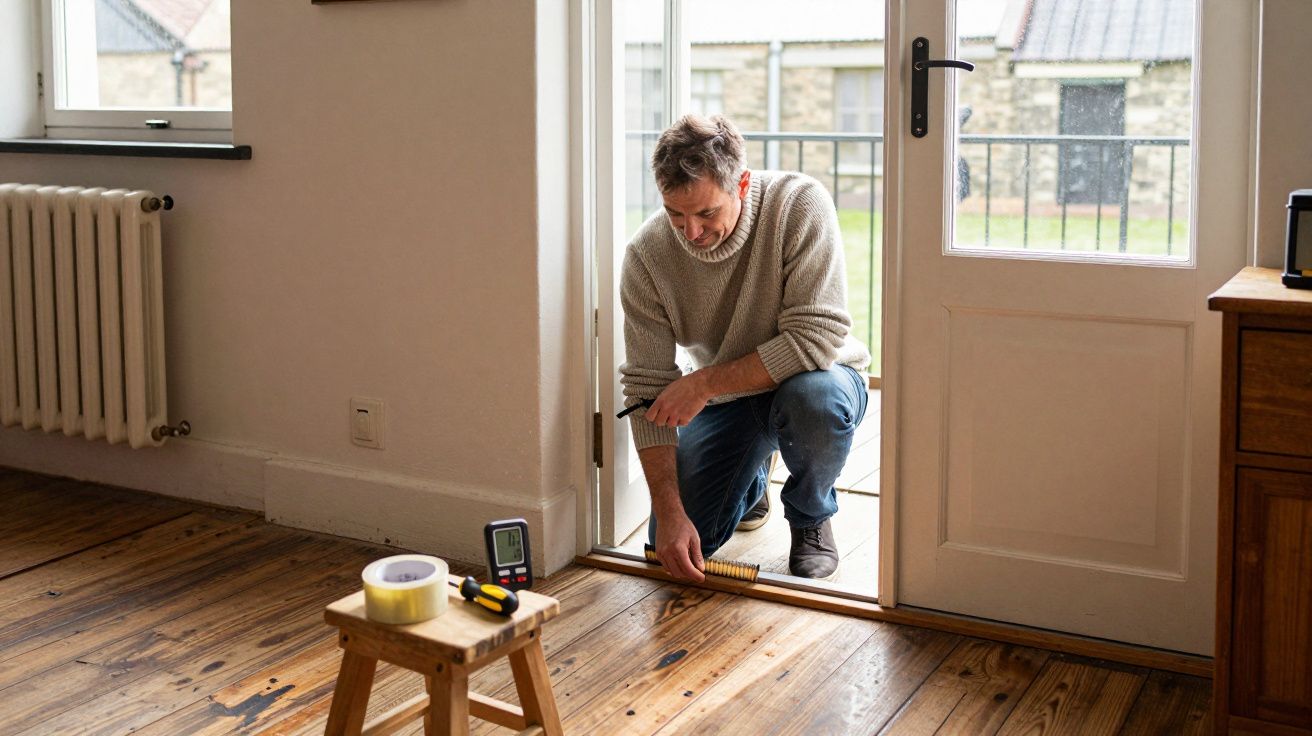
- Stop uncontrolled draughts: brush strips on doors, seal loft hatches, fit chimney balloons (if appropriate), close gaps around pipes.
- Insulate where it’s low-risk: loft insulation is usually the safest, quickest return; insulate hot water cylinders and pipes.
- Run heating more steadily: in many older properties, a consistent low-to-medium temperature reduces condensation more than stop-start blasts.
- Ventilate on purpose: use extractor fans, crack windows after showers, don’t block existing vents unless you replace them with a proper alternative.
- Check the water out: clear gutters, fix downpipes, keep air bricks free, and watch for splashes at ground level.
If the house is listed or has solid walls, be cautious with “standard” retrofit advice. Trapping moisture inside a wall with the wrong insulation or paint can turn a cold problem into a rot problem.
A quick read of symptoms (so you don’t chase the wrong fix)
| What you see | Likely cause | First move |
|---|---|---|
| Mould in corners/behind wardrobes | Cold surfaces + poor airflow | Pull furniture off walls, steady heat, extract moisture |
| Radiators hot, room still cold | Heat loss + draughts | Draught-proof first, then check balancing/controls |
| Streaming windows each morning | High humidity overnight | Ventilate bedrooms, trickle vents/extract, don’t dry clothes there |
The calmer way to get through winter
Older properties aren’t “bad houses”. They’re houses with different assumptions: more air change, different materials, different heat sources. When we ask them to behave like a new-build without adjusting how we heat and ventilate, they push back in the only language they have - cold, damp, and cost.
Pick one improvement you can actually complete this week. Then pick the next. Consistency beats heroics, and winter rewards the boring fixes.
FAQ:
- Why does my older home feel colder than the thermostat reading? Because surface temperatures (walls, floors, corners) can be much lower than the air temperature, especially with solid walls and draughts. Your body responds to those cold surfaces, not just the number on the wall.
- Should I heat an older property constantly? Often, a steadier temperature reduces condensation and feels more comfortable, but it depends on insulation level and budget. If you’re unsure, try a week of consistent moderate heating and compare comfort and humidity.
- Do dehumidifiers solve damp in winter? They help with internal moisture and can reduce condensation, but they don’t fix leaks, cold bridges, or missing ventilation. Treat them as support, not the whole plan.
- Is cavity wall insulation relevant to older properties? Many older homes have solid walls with no cavity, so cavity insulation isn’t an option. For cavity homes, suitability depends on exposure, wall condition and installation quality-poor installs can cause damp issues.
- What’s the first upgrade with the best payoff? Loft insulation and draught-proofing are usually the quickest wins, followed by heating controls (thermostatic radiator valves, programmer settings) and fixing ventilation in kitchens/bathrooms.





Comments (0)
No comments yet. Be the first to comment!
Leave a Comment