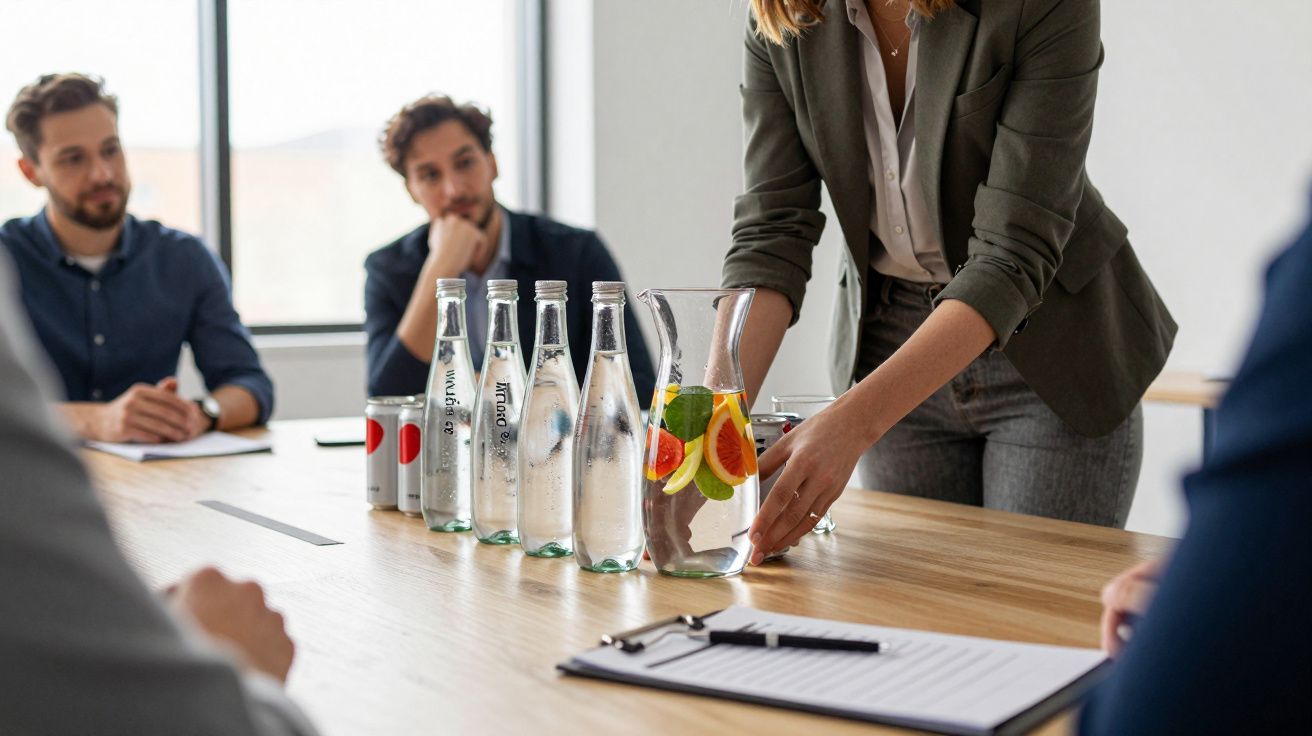
In meeting rooms, client kitchens and workplace canteens, coca-cola is often the default “safe” drink: recognisable, consistent, easy to source, and rarely questioned. Yet a phrase that looks like a stray chat message - “of course! please provide the text you would like me to translate.” - captures the mood professionals are in right now: show me the inputs, show me the terms, show me what’s really going on. In 2025, that instinct is being applied to brands as much as to contracts, data and risk.
It isn’t that people suddenly stopped liking the taste. It’s that the calculus around health, reputation, pricing and corporate signalling has tightened, and Coca‑Cola sits right where all those pressures meet.
The “default choice” is no longer frictionless
For years, ordering Coca‑Cola for an event was the low-drama option. It ticked boxes: it’s widely available, guests recognise it instantly, and it usually avoids the awkwardness of unknown brands.
That simplicity is eroding. In offices and professional settings, the drink is increasingly seen as a choice with implications-about sugar, about ultra-processed food, about how the company behaves, and about what it says to offer it as the main option.
Professionals are not “boycotting”. They’re quietly recalibrating.
What changed: the risk lens widened
The biggest shift is not one headline, but the way professionals now interpret everyday products. Procurement teams, HR leads, practice managers, event organisers, and even personal trainers are being asked the same questions from different angles:
- “Is this aligned with our wellbeing message?”
- “Will this look tone-deaf on social media?”
- “Are we locking ourselves into price rises?”
- “Do we have inclusive options for different diets and preferences?”
Coca‑Cola is a case study because it’s ubiquitous. When norms change, the most visible brand feels it first.
Sugar and “health theatre” at work events
Health at work used to mean fruit bowls and step challenges. Now it touches insurance costs, sickness absence, culture, and the credibility of leadership messaging.
A growing number of teams feel the contradiction: you can’t run a “reduce sugar” campaign and then stock fridges mainly with full-sugar fizzy drinks. Even if you offer Diet Coke and Coke Zero, some employees view that as swapping one debate (sugar) for another (sweeteners, cravings, ultra-processed patterns).
In practice, the rethink often looks boring rather than dramatic:
- Smaller quantities of fizzy drinks on order forms
- More water, sparkling water, and low/no-sugar alternatives
- A deliberate mix so Coca‑Cola isn’t the centre of the table
It’s less “ban it” and more “stop letting it be the default”.
Reputation management: the brand is too visible to be neutral
Professionals are increasingly aware that brands are social signals. A can on a conference table is not just a drink; it’s a logo in photos, a procurement decision, and-rightly or wrongly-a value statement.
That matters more now because workplace content travels. An internal event becomes a LinkedIn post. A staff day becomes a client-facing reel. If your organisation trades on wellness, sustainability, or community credibility, the optics of what you serve starts to matter.
Coca‑Cola’s strength-instant recognition-becomes a weakness in a hyper-visible environment.
Price and “shrinkflation” fatigue hits purchasing teams
Even when people don’t track exact prices, they feel the pattern: multipacks cost more, portion sizes fluctuate, and deals come and go. Procurement teams are under pressure to justify spend, and branded soft drinks can look like an easy line item to trim without “harming the core”.
This isn’t unique to Coca‑Cola, but it’s a common trigger for switching behaviour:
- If the premium isn’t delivering additional value, switch to a competitor
- If staff are indifferent, move to own-brand or a rotating selection
- If availability contracts change, renegotiate or diversify suppliers
Once that habit forms-we can swap this out-brand loyalty weakens.
The ingredient conversation: not one issue, but many small ones
Most professionals aren’t reading ingredient lists can by can. What’s changed is that more of them know the vocabulary now: ultra-processed foods, additives, sweeteners, acidity, caffeine, portion size, glucose spikes.
So the conversation doesn’t stay neatly in one box. It sprawls:
- Full sugar: “Why are we serving this so routinely?”
- Diet: “Are we comfortable pushing sweeteners?”
- Zero: “Does this encourage the same habits anyway?”
- Energy and caffeine culture: “Are we fuelling burnout with quick hits?”
The result is a quiet drift towards drinks that don’t generate debate: water, tea, coffee, and simpler soft drinks with shorter ingredient lists.
What professionals are doing instead (without making a fuss)
In many workplaces, the shift shows up as policy-by-habit rather than policy-on-paper. Someone changes the order. Someone adds options. Someone stops topping up the fridge with the usual crates.
Common “low drama” replacements include:
- Still and sparkling water as the primary default
- Fruit-infused water at events (cheap, photogenic, low controversy)
- Smaller cans rather than larger bottles, if fizzy drinks are stocked
- A mixed basket approach: one cola option, one low/no-sugar option, one “adult soft drink” option
Nobody makes a speech about it. It just becomes normal.
A simple way to think about it: the algorithm changed
Like a credit score model update, the rules people use to judge everyday choices have been reweighted. The drink didn’t change overnight, but the way it is evaluated did: health messaging carries more weight, reputational risk carries more weight, and procurement scrutiny carries more weight.
Coca‑Cola remains a powerful brand. But power cuts both ways: it’s harder to hide behind “it’s just a drink” when the logo is doing so much signalling.
A quick “should we stock it?” checklist
- Are we positioning ourselves as health-led or wellbeing-first?
- Will this be photographed, posted, or client-visible?
- Do we offer credible alternatives that don’t feel like an afterthought?
- Are we paying a premium for habit rather than preference?
If two or more answers make you hesitate, that hesitation is the story.
Key takeaway at a glance
| Pressure point | What’s driving the rethink | Typical response |
|---|---|---|
| Wellbeing credibility | Sugar/UPF scrutiny at work | Make water the default |
| Brand optics | Logos in photos and posts | Diversify options |
| Cost discipline | Pricing and value questions | Reduce volume or switch |
FAQ:
- Is this a “Coca‑Cola boycott” trend? Not usually. It’s more often a quiet shift in defaults-less Coca‑Cola by habit, more variety by design.
- Do Diet Coke and Coke Zero solve the issue for workplaces? They solve the sugar question for some people, but can introduce new debates about sweeteners and ultra-processed habits.
- What’s the simplest change that reduces friction? Put still/sparkling water first on every order and treat cola as one option among several, not the centrepiece.
Comments (0)
No comments yet. Be the first to comment!
Leave a Comment