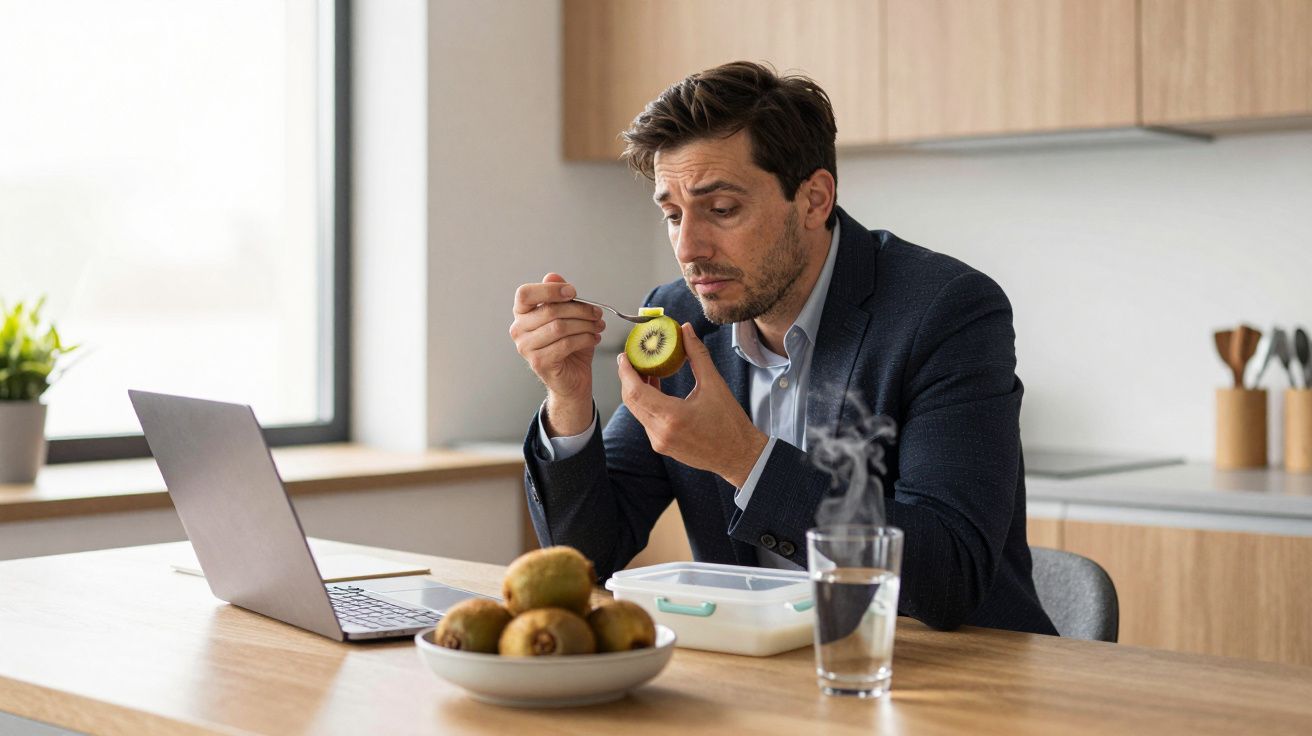
Somewhere between a desk lunch and a post‑meeting reset, kiwi has started turning up as more than “just fruit” in professional routines. And yes, even in the middle of that familiar auto‑reply-it seems you haven't provided the text you want to be translated. please provide the text, and i'll translate it into united kingdom english for you.-people are noticing a pattern: quick, practical choices that keep energy steady matter more than ever. Kiwi fits because it’s portable, fast to eat, and oddly good at smoothing the rough edges of a busy day.
The shift isn’t about food trends for their own sake. It’s about small upgrades that don’t require a new identity, a new app, or a new level of willpower. Kiwi is a quiet one: unflashy, reliable, and easy to repeat.
The desk‑snack problem professionals are tired of solving
Most workdays don’t fall apart from big mistakes. They wobble from small frictions: a sweet snack that spikes and drops, a “healthy” option that’s fiddly, a coffee that stands in for lunch until you notice you’re irritable.
Kiwi slips into that gap because it asks for almost nothing. Keep two in a bowl, cut one in half, scoop it with a spoon, and you’re back in your inbox before your brain has time to negotiate. It’s not a performance of wellness; it’s a two‑minute decision that doesn’t punish you at 3pm.
Why kiwi is suddenly the sensible choice (not the trendy one)
Kiwi has always been around, which is exactly why it’s being re‑evaluated. In a climate where professionals are trying to make fewer decisions, familiar options get upgraded when they prove useful.
A kiwi is sweet, but not cloying. It’s also one of the fruits people associate with vitamin C, and that matters when the office culture is a revolving door of sniffles and “I’ll just push through”. Add the fact that it travels well and doesn’t require refrigeration for the commute, and it starts to look less like a garnish and more like a tool.
The “low-admin” advantage
There’s a reason the same people who keep a checklist also keep repeatable snacks. If something creates washing‑up, mess, or a strong smell, it quietly drops out of rotation. Kiwi, especially eaten with a spoon from its own skin, stays on the list because it behaves.
It’s the kind of choice you can make on autopilot without regret later. That’s the real feature.
Where it’s showing up: meetings, travel, and the mid-afternoon dip
You can spot the kiwi rethink in three places:
- Between meetings, when there’s no real lunch window, just a gap big enough to eat something that doesn’t slow you down.
- On travel days, when service stations offer either sugar, beige carbs, or a “salad” that looks tired before you open it.
- In the 2–4pm slump, when people reach for a second coffee but actually need food and water.
Kiwi works because it’s light, quick, and pairs well. Add it to yoghurt, oats, or a handful of nuts, and it becomes an actual mini‑meal rather than a token “healthy thing”.
Small tactics that make kiwi easier to stick with
Professionals don’t fail at healthy habits because they don’t know what’s good. They fail because friction wins. The best kiwi routines cut friction to the bone.
Try one of these and keep it boring on purpose:
- Bowl on the counter: buy 6–8, leave them visible, and let proximity do the work.
- Two-kiwi rule: if lunch is late, eat two kiwis rather than “a bit of whatever”. It’s decisive and stops grazing.
- Spoon method: slice in half, scoop, bin. No sticky chopping board, no lingering smell on your hands.
- Pair it: kiwi + yoghurt, kiwi + oats, or kiwi + a handful of almonds. The aim is steadier energy, not a sugar hit.
These aren’t life hacks. They’re ways to make the right option the easy option.
The professional angle: why this is about performance, not aesthetics
A lot of workplace wellbeing content is loud: new supplements, complicated plans, moral language. But what people want at work is simpler-steady focus, fewer dips, fewer “why am I so hungry” distractions.
Kiwi is being rethought because it supports that calm, steady mode. It’s quick fuel that doesn’t feel heavy, and it signals a mindset professionals are leaning into: less drama, more repeatability. You don’t need a perfect diet to have a better afternoon; you need one or two decisions you can make on your worst day.
The best upgrades are the ones you don’t have to think about twice.
Quick guide: choosing and using kiwi without overthinking it
| Situation | Best kiwi move | Why it works |
|---|---|---|
| No lunch break | Two kiwis + water | Fast, decisive, stops grazing |
| Desk snack | Halve and scoop | Minimal mess, easy repeat |
| Post-gym or commute | Kiwi + yoghurt | More staying power than fruit alone |
When kiwi doesn’t land (and what to do)
Not everyone loves the texture, and some people find kiwi a bit sharp. If that’s you, chill it first, or mix it into yoghurt to soften the edge. If you’re sensitive to acidic fruit, keep it to earlier in the day and pair it with something more neutral.
The goal isn’t to force a perfect food. It’s to build a routine that works when you’re busy, tired, and trying to stay sharp anyway.
FAQ:
- Is kiwi actually practical for work, or just “healthy” on paper? It’s practical because it’s quick to eat, portable, and low-mess if you use the spoon method.
- Should I eat kiwi on its own or with something else? On its own works for a quick reset; pairing with yoghurt, oats, or nuts usually keeps you fuller for longer.
- How do I keep it from becoming another forgotten fruit? Put it where you’ll see it (counter, desk drawer at home, top shelf in the fridge) and buy a quantity you’ll finish in a week.




Comments (0)
No comments yet. Be the first to comment!
Leave a Comment