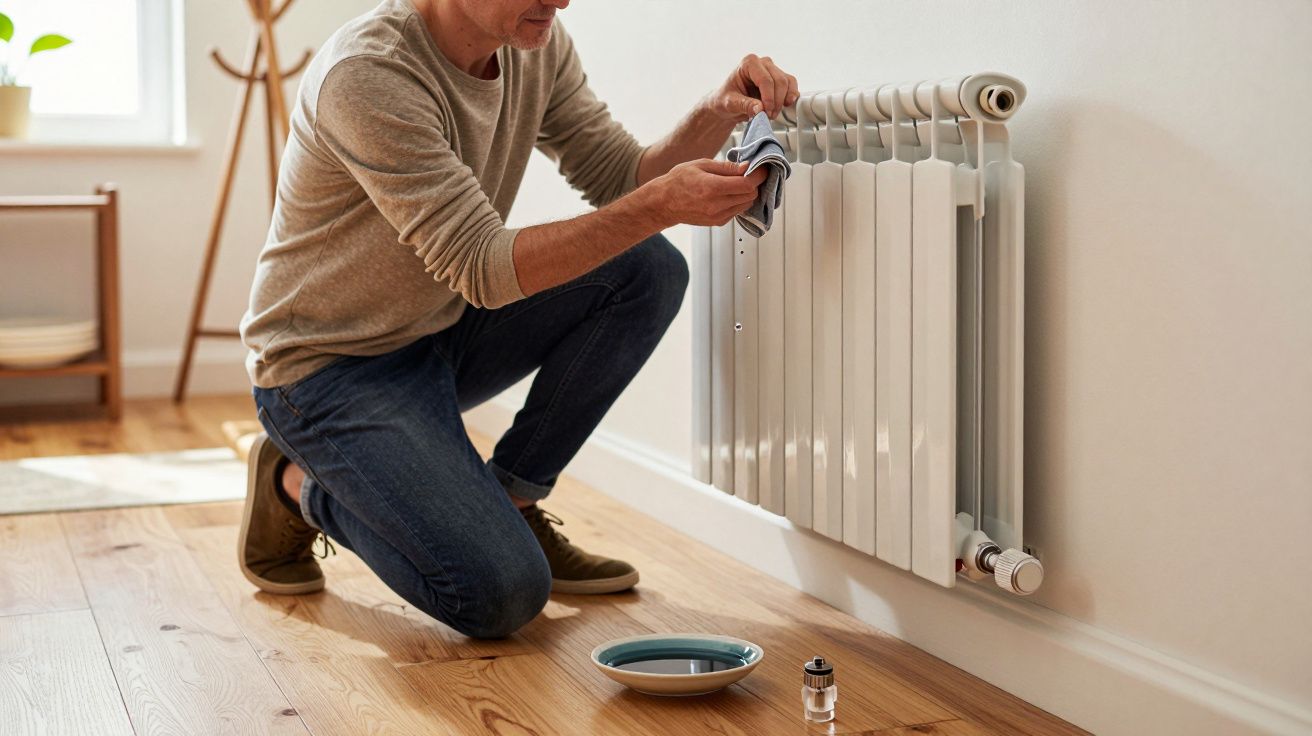
You book a “full service”, the engineer leaves, and the radiators are still cold at the top like they’re sulking. Someone points to the magnetic system filter on the pipework and says, “That’s been cleaned,” as if that guarantees heat will now reach every room. In a wet heating system, it doesn’t-because warmth is a flow problem first, and a cleanliness problem second.
It usually shows up on the first cold evening afterwards. The boiler sounds normal, the pipes are warm near the airing cupboard, and yet the spare room radiator is half-hot, half-dead. You turn the thermostat up, then down, then up again, and you start wondering what you actually paid for.
What “full service” normally covers (and what it doesn’t)
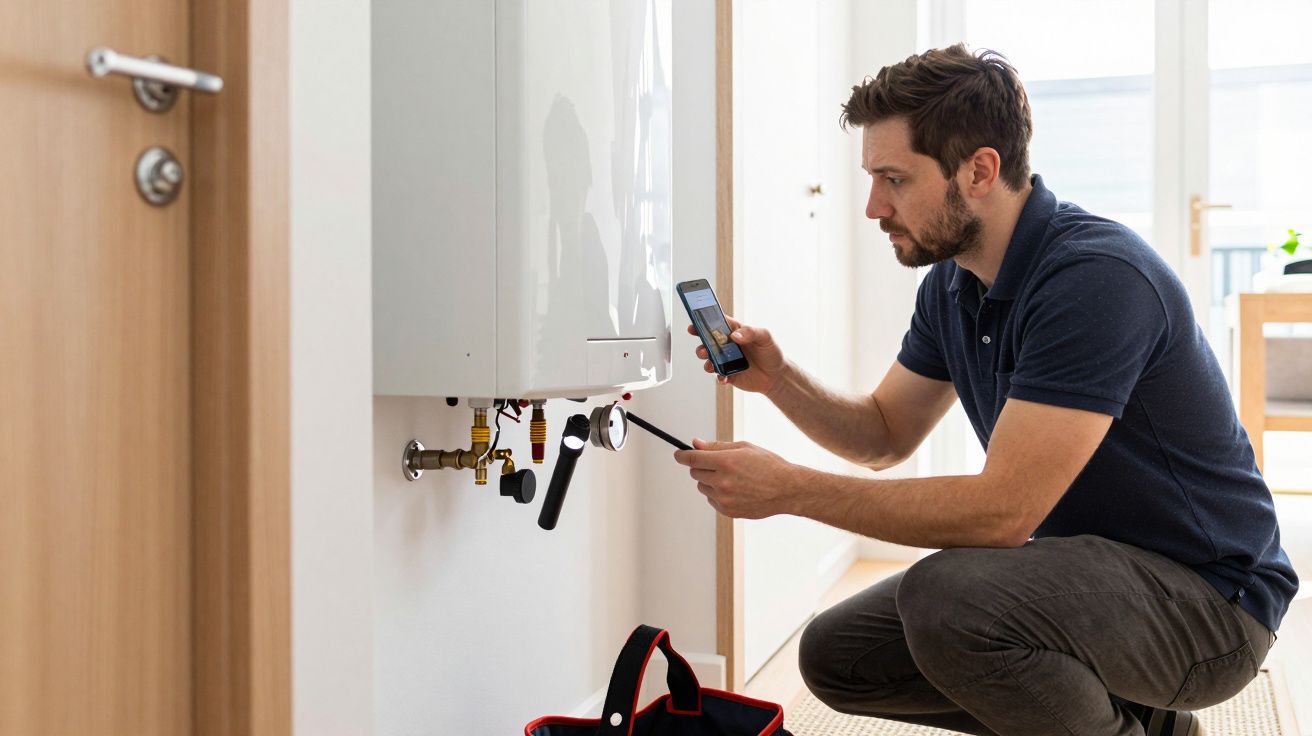
Most boiler services are about safety and combustion, not the health of your whole central heating circuit. A good engineer will check flue integrity, gas pressure, condensate, seals, and basic operation; they may also look at system pressure and expansion. That’s important work-but it doesn’t automatically fix distribution issues out at the radiators.
A magnetic system filter service, likewise, is often a quick clean of the magnet and bowl to remove sludge it has already caught. Helpful, yes. But it won’t remove the sludge that’s settled in radiators, the debris stuck in a valve, or the air trapped in a high point of the pipework.
If you want a simple way to think about it: a service proves the boiler can make heat. It doesn’t prove the heat can travel.
The usual reasons radiators stay cold after a service
When a radiator is cold after you’ve “done everything”, it’s almost always one of these. Some are quick fixes; some point to deeper system condition.
- Air trapped in the radiator: typically cold at the top, warmer at the bottom.
- Balancing is off: nearest radiators steal the flow; far ones starve.
- Sludge or magnetite in the radiator panels: cold at the bottom or with dead stripes.
- Partially closed or failed valves (TRV/lockshield): a stuck pin, seized spindle, or closed lockshield.
- Low system pressure or filling issues (sealed systems): circulation weak, boiler may short-cycle.
- Pump or diverter limitations: the boiler makes heat, but the system doesn’t push it effectively.
- Incorrectly set bypass / poor hydraulic design in older retrofits: water takes the easy route, not the cold rooms.
The frustrating bit is that a service can coincide with the problem becoming noticeable. The system’s been off all summer, air has collected, a TRV pin has stuck, or a radiator that was “just about” coping last winter finally gives up.
Air: the simplest culprit that still catches people out
Air in a radiator behaves like a cork. Hot water can’t fill the top of the panel, so you get that classic cold cap and a lukewarm lower half. Bleeding often fixes it, but only if you do it in the right order and don’t introduce a new issue.
A quick reality check helps:
- Turn heating off and let things cool slightly.
- Bleed the highest radiators first, then work down.
- Keep an eye on boiler pressure (sealed systems) and top up if it drops.
If you bleed and the radiator heats once-then goes cold again a few days later-treat that as a signal. Air keeps entering because pressure is unstable, there’s a leak, or you’ve got ongoing corrosion producing gas in the system.
Flow and balancing: the invisible reason the far rooms never warm up
A central heating system is lazy. Water goes where it’s easiest. If the radiators closest to the boiler have wide-open lockshields, they’ll hog the flow and get roasting, while the last radiator on the run stays cold no matter how long you wait.
Balancing isn’t glamorous, and it’s not always included in a “service”. It’s also the difference between “some heat” and “even heat”.
Signs you’re unbalanced:
- One or two radiators get hot within minutes, others lag far behind.
- Upstairs struggles while downstairs bakes (or vice versa).
- The boiler cycles on and off because the nearby radiators satisfy demand too quickly.
A proper balance is a measured adjustment of lockshields so each radiator gets its share. It’s slow, but it’s definitive.
Sludge: why cleaning a magnetic system filter can still leave radiators cold
The magnetic system filter is a catcher, not a cure. It grabs circulating magnetite (that black, ink-like sludge) before it reaches the boiler’s heat exchanger. Cleaning it reduces risk and can improve flow a bit, but it doesn’t magically unstick everything that has already settled.
Radiators are where sludge loves to live: wide, slow-moving panels where heavy debris drops out. You can end up with:
- Cold bottoms: sludge bed blocking the lower channels.
- Patchy heat: internal baffles partially blocked.
- Noisy system: kettling, rushing, or gurgling as flow fights restrictions.
If a radiator stays cold despite bleeding and open valves, and the pipe into it is hot while the radiator stays lukewarm, sludge is high on the list. That’s when you start thinking about targeted flushing, chemical clean, or-on older, heavily contaminated systems-a full powerflush done by someone who tests results, not someone who sells a rinse.
Valves: the tiny mechanical failure that looks like a big heating problem
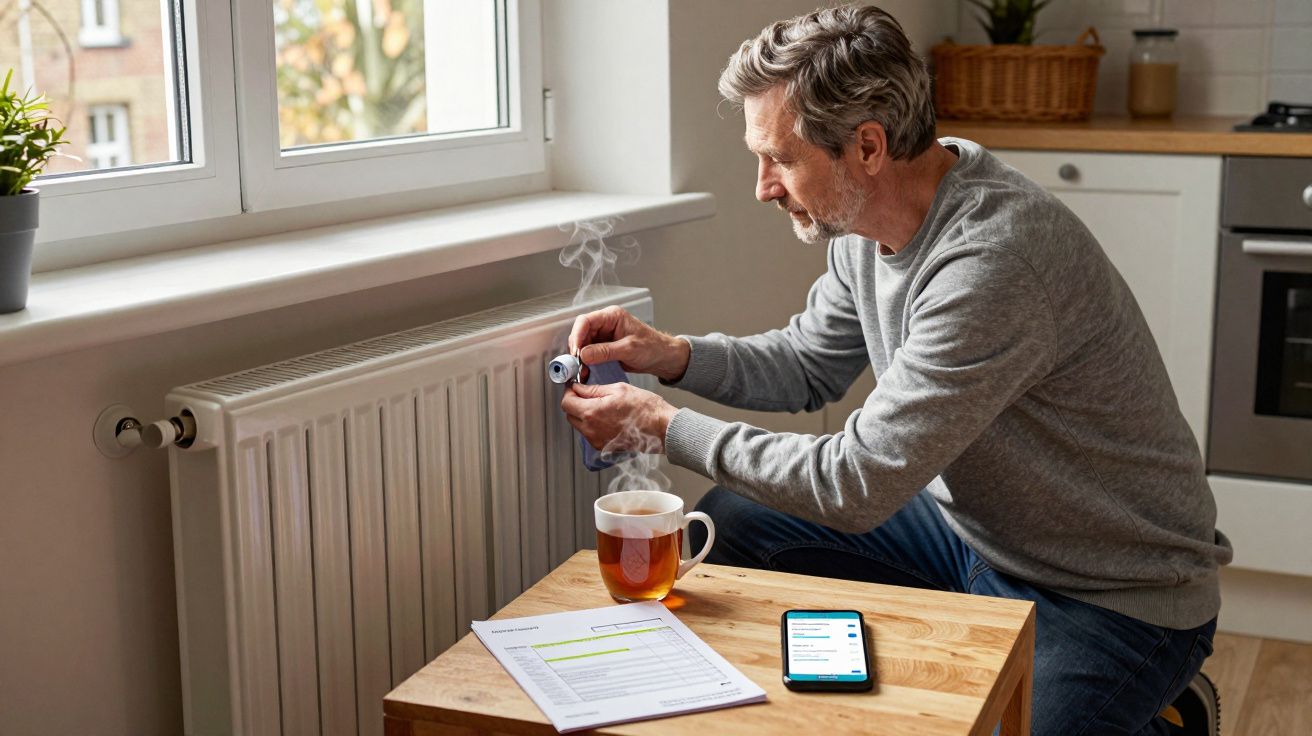
TRVs commonly stick after months of being left at one setting. The head comes off, the pin doesn’t spring back, and the radiator effectively stays shut even though the heating is on. Lockshields can also be accidentally knocked or left closed after work.
A fast check (if you’re comfortable and safe to do so):
- Make sure the TRV is turned up.
- Remove the TRV head and gently press the pin; it should move and spring back.
- Confirm the lockshield hasn’t been fully closed.
If the pin won’t move, don’t smash it. Gentle persuasion is fine; forcing it can cause leaks. At that point, replacing the valve is usually cheap compared with another winter of one cold room.
The “it was fine before” trap: what changed after the service?
Sometimes the service didn’t cause the cold radiator-it revealed it. But there are a few ways a routine visit can coincide with a new symptom:
- System repressurised after checks: trapped air moves and collects in radiators.
- Pump speed or settings adjusted: changes how flow distributes (good or bad).
- Filter cleaned: improved circulation can dislodge debris that then relocates into a valve or radiator.
None of these are “wrong”; they’re just reasons you can see different behaviour afterwards. Heating systems are messy ecosystems-disturb them and they move around.
What to ask for next time (so “full service” means warm radiators)
If your goal is comfort, ask for comfort-focused checks-not just boiler-focused ones. A decent engineer will either do these or tell you they’re separate, chargeable tasks.
- Check and note system pressure cold and hot (sealed systems)
- Confirm pump operation and that the boiler is achieving design temperatures
- Inspect TRVs and lockshields for stuck pins and sensible settings
- Assess balancing (even a quick temperature comparison helps)
- Open and show you the magnetic system filter contents: a little sludge is normal; a heavy paste suggests wider contamination
- Recommend inhibitor levels and add inhibitor if needed after draining/bleeding work
If you want a single line to use on the phone: “The boiler’s been serviced, but several radiators are still cold-can you diagnose air, balancing, valves, and sludge, not just the appliance?”
A quick “pattern guide” you can use at home
| Symptom | Most likely cause | Typical next step |
|---|---|---|
| Cold top, warm bottom | Air | Bleed + check pressure, look for repeat air |
| Hot feed pipe, cold radiator | Stuck valve or sludge | Check TRV pin/lockshield, consider flush |
| Nearest rads hot, far rads cold | Balancing/flow | Balance lockshields, review pump settings |
When it’s time to stop tinkering and call someone
Bleeding and checking a valve setting are reasonable. Beyond that, repeated topping up, persistent cold patches, or black water at a bleed point are the system telling you it needs proper diagnosis.
Call a professional promptly if:
- You’re losing pressure regularly.
- Radiators need bleeding often.
- The boiler is short-cycling or making unusual noises.
- Multiple radiators are cold in a pattern (ends of runs, upstairs, extensions).
A service keeps the boiler safe. Getting radiators consistently hot is the next layer-and it’s usually airflow, flow, or sludge, not “mystery boiler magic”.
FAQ:
- Why are my radiators cold after the engineer cleaned the magnetic system filter? Because the filter only catches circulating debris; it doesn’t remove sludge already settled inside radiators or fix balancing and valve issues.
- Is a boiler service supposed to include balancing the radiators? Usually not. Balancing is a separate, time-consuming task focused on distribution, not boiler safety checks.
- If the radiator is cold at the top, is bleeding always safe? Generally yes, but watch the system pressure afterwards on sealed systems and don’t keep topping up without finding the cause of repeated air.
- What does black water from a bleed screw mean? It often indicates magnetite/sludge in the system and a need for inhibitor, cleaning, and possibly flushing depending on severity.



Comments (0)
No comments yet. Be the first to comment!
Leave a Comment