You book a slot, someone turns up, ticks a list, and you feel like a responsible adult. Planned maintenance is meant to keep homes safe and efficient, yet timing issues mean the visit often lands neatly on your calendar and poorly in your reality. That mismatch is why so many “serviced” homes still leak, trip, mould, or quietly waste money.
It usually starts with good intentions. The boiler gets its annual check, the gutters are “done in autumn”, and the extractor fan gets a wipe when you remember. Then a cold snap hits a week early, a storm dumps leaves in a day, and the one problem you didn’t schedule becomes the one you pay for.
The calendar feels organised. Your house doesn’t.
Homes don’t fail politely at 12 months and one day. They fail when pressure builds, when weather swings, when a small drip turns into damp behind a cupboard. Service intervals are human-friendly; houses are condition-driven.
A boiler can pass a service in October and still struggle in January because the issue isn’t the boiler, it’s the radiator sludge nobody checked, the thermostat placed in a warm hallway, or the vent that’s half blocked by dust. Likewise, a roof can be “fine” on inspection and then lose a tile in the first proper gale because that’s when the weak fixing finally gets tested.
Servicing schedules aren’t useless. They’re just often asked to do a job they can’t do: predict the exact week your home will be stressed.
Why planned maintenance misses what actually breaks
Most household failures come from boring chains of events. The schedule tends to look at single components; real problems live in the handovers between them.
Here’s where it commonly goes wrong:
- The visit is too short for the hidden bits. A quick check won’t reveal a slow leak under a bath panel, or a hairline crack that only opens when pipes expand with heat.
- Checks happen in “normal conditions”. A system that behaves at 18°C can fall apart at 2°C. Gutters that look clear in mild weather overflow when the downpour is sideways.
- Access dictates attention. If the loft hatch is awkward or the stop tap is buried behind boxes, it’s less likely to get properly assessed. Homes reward ease, not importance.
- Pass/fail thinking replaces trends. “No fault found” can still mean “wear increasing”. Without noting drift-pressure loss, noise changes, slower drains-you miss the early warning.
And then there’s the most human bit: you assume the scheduled service means you can stop thinking about it. That’s the trap.
Timing issues: the quiet reason “nothing was flagged”
Timing issues in home maintenance aren’t just about being late. They’re about arriving at the wrong moment in the risk cycle.
Gutters are the obvious example. Clear them in early autumn, feel virtuous, and then a single week of wind drops a full tree’s worth of leaves into the run. The schedule says “done”; the downpipe says “blocked”.
Ventilation is another. You can service an extractor fan, but the real problem might be how the household uses it: showers longer in winter, windows shut, laundry drying indoors. The moisture load rises, the airflow stays the same, and mould arrives right after the check.
Even electrics have their version of this. An extension lead can be safe for months, then gets overloaded at Christmas, hidden behind a curtain, warmed day after day. The risk isn’t a date; it’s a behaviour plus a moment.
The fix isn’t more servicing. It’s better triggers.
The homes that stay calm aren’t the ones with the longest spreadsheets. They’re the ones with small, repeatable triggers that sit alongside the annual stuff.
Try this approach:
- Keep the annual planned maintenance, but shrink your faith in it. Use it for safety-critical checks, not peace of mind.
- Add “event-based” checks. Do a 10-minute sweep after high wind, heavy rain, or the first freeze.
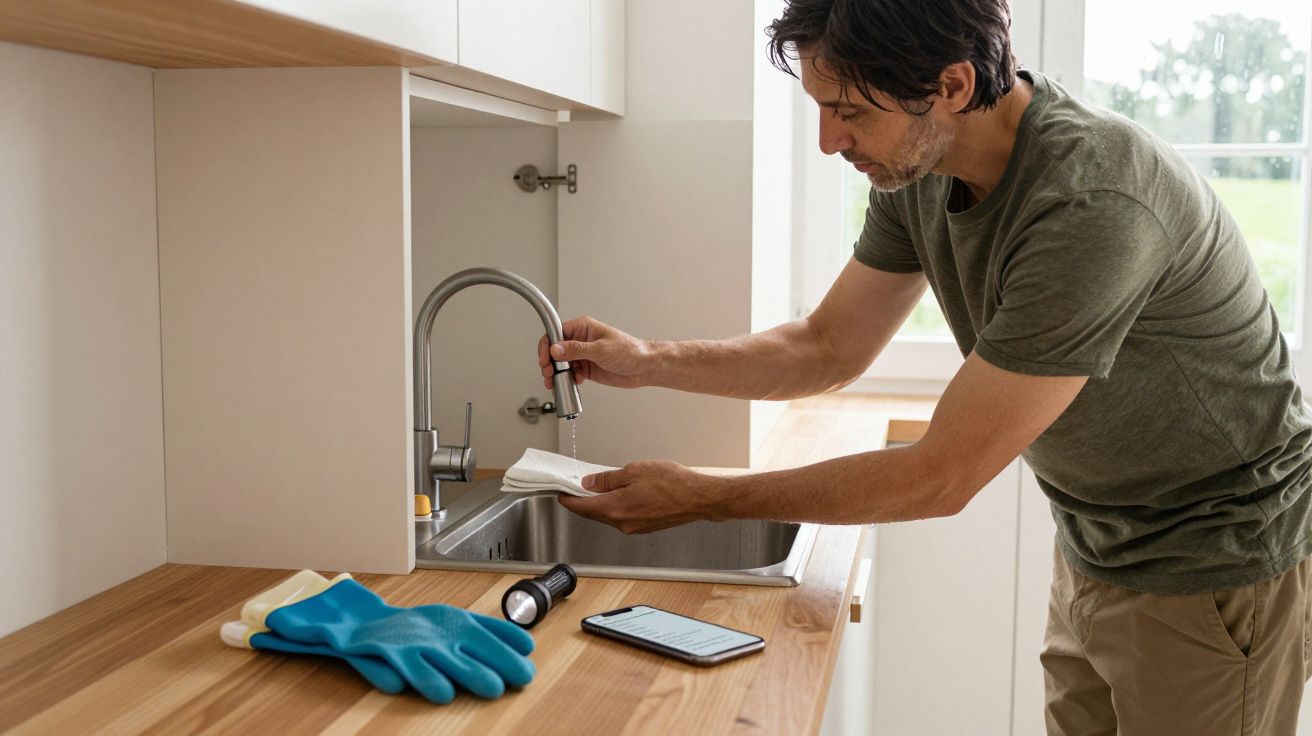
- Create three micro-zones you always glance at. Under-sink cupboard, boiler pressure/pipework area, and one “damp-prone” corner (bathroom ceiling, window reveal, or behind a wardrobe).
- Log tiny changes, not just big faults. A note on your phone is enough: “Gurgle in kitchen sink”, “Boiler pressure dropped twice”, “New musty smell in box room”.
It’s like keeping a car tidy with a 60-second routine rather than waiting for an expensive valet. Small, regular attention beats rare, heroic effort-especially when the house is being stressed by weather and use, not by the calendar.
A simple home rhythm that actually works
You don’t need to become the person with labelled folders. You need a rhythm that fits real life.
- Monthly (10 minutes): test smoke alarms, check boiler pressure, look for drips under sinks, run extractor fans and listen for sluggishness.
- Seasonal (30 minutes): check gutters/downpipes from ground level, inspect sealant around baths/showers, bleed radiators if needed, clear external vents.
- After events (10 minutes): after storms-look for slipped tiles, overflowing gutters, new stains; after freezes-check outdoor taps, pipework noises, and radiator performance.
If you live in a flat, swap “roof tiles” for “windows and vents”, and “gutters” for “balcony drains” or shared downpipes you can at least visually assess. The principle is the same: stop relying on one big appointment to catch a problem that’s building between appointments.
“Most expensive call-outs aren’t caused by a lack of servicing. They’re caused by a small change that went unnoticed for weeks,” a local contractor told me. “Houses whisper before they shout.”
The point you actually care about: fewer surprises
A schedule is comforting because it’s definite. But the home you live in is not definite. It’s full of moisture, heat, load, and little habits that change with the seasons.
Planned maintenance should stay as your baseline. Your real protection comes from noticing when the baseline shifts-when the fan sounds tired, the window starts streaming, the boiler pressure keeps dipping, or the gutter overflows only on one corner of the house.
That’s not obsessing. That’s catching the failure at the stage where it’s still cheap.
| What the schedule covers | What it often misses | The upgrade |
|---|---|---|
| Annual safety checks | Weather-driven stress points | Event-based mini checks |
| Individual components | The “in-between” problems (damp, airflow, drainage) | Zone glances + notes |
| Pass/fail results | Gradual decline | Track small changes |
FAQ:
- Isn’t planned maintenance enough if I do it every year? It’s a strong baseline, especially for boilers and electrics, but it won’t catch issues that appear between visits or only show under extreme weather or heavy use.
- What are the most common timing issues in homes? Storm debris blocking gutters after they were “cleared”, freezing weather revealing weak pipework, and winter moisture loads overwhelming ventilation that seemed fine in summer.
- I’m not handy-what’s the minimum I should do? A monthly look for leaks, a quick boiler pressure check, and a post-storm walkaround for stains/overflows will prevent a large share of nasty surprises.
- Won’t this turn into constant worrying? Not if you keep it small and routine. The goal is a calm rhythm: short, predictable checks triggered by seasons and weather, not daily vigilance.






Comments (0)
No comments yet. Be the first to comment!
Leave a Comment