The first time the heating “worked” but the tiles still felt like February, I blamed the floor.
Underfloor heating is meant to turn kitchens, bathrooms and open-plan ground floors into places you can actually stand in barefoot, but its failures often begin in system design choices made on paper weeks before anything is poured. That matters because the symptom is usually slow, vague and expensive: a room that never quite warms up, energy bills that creep, and a homeowner doing that quiet thing where they keep nudging the thermostat like it’s a volume button.
It’s an easy trap. The floor is where you feel it, so the floor gets the blame. Yet with most underfloor heating problems, the “fault” lives in the plant room, the manifold cupboard, or a spreadsheet full of heat-loss numbers someone rounded down.
The “cold floor” illusion: why your feet are a terrible diagnostic tool
Underfloor heating is low-temperature by nature. It’s designed to run gently, steadily, and for longer periods than radiators. That means you can have a perfectly functioning system that still doesn’t feel hot to the touch, especially with certain floor finishes.
But there’s a line between “subtle warmth” and “it can’t keep up”. When you cross it, the causes are rarely dramatic failures in the screed. They’re usually quiet mismatches: flow temperatures set wrong, loops too long, pump head too low, controls fighting each other.
The floor is the last link in a chain. By the time you notice discomfort, the real problem has often had weeks to settle in.
A common story: everything is installed, nothing feels right
The installer commissions it. The app shows 21°C. The room sits stubbornly at 18.5°C on cold days. You start doing little experiments: leaving it on all night, turning it off all day, boosting it before guests come, blaming the glazing, blaming the insulation, blaming yourself.
Then someone looks at the manifold and says something like: “These loops are massive.”
It’s a familiar punchline. The system is “on”, the pump is humming, the actuators click, and yet the basic physics-heat output versus heat loss-was never truly matched.
Where underfloor heating failures really begin (and why they’re so boring)
Most failures aren’t a snapped pipe. They’re a set of small, boring decisions that stack.
Think of it like a warning light in a car: the dashboard tells you something’s off, but it can’t tell you whether it’s catastrophic or just… mis-set. Underfloor heating does the same. The symptom is always “not warm enough” or “costs too much”. The cause is usually upstream.
1) Heat loss was guessed, not calculated
If the heat loss is undercooked, the design output won’t match reality. That shows up as rooms that only reach setpoint in mild weather, then fall behind when it’s properly cold.
Common shortcuts that come back to haunt people:
- Defaulting to “100 W/m²” without checking room-by-room losses.
- Ignoring high air change rates (draughty doors, extract fans, leaky downlights).
- Treating a big glazed extension like a normal living room.
- Assuming insulation levels that aren’t actually achieved on site.
This is where the failure starts far from the floor: in the assumptions.
2) Loops are too long, so the heat arrives tired
Long loops mean higher pressure drop. Higher pressure drop means lower flow rate unless the pump can overcome it. Lower flow rate means less heat delivered, and bigger temperature drop across the loop.
You’ll often see it as a manifold with one or two loops behaving and others sulking. The far end of a long loop can be noticeably cooler, especially in larger rooms or where pipe spacing is wide.
A rough rule installers use (varies by pipe size and design) is to keep loop lengths sensible-often around 80–100 metres for 16mm pipe. Push beyond that and you’re asking the circulator to do emotional labour it never signed up for.
3) The flow temperature is capped too low (or set too high)
Underfloor heating needs the right flow temperature for the build-up and the demand. Too low, and output is capped. Too high, and you can get overshoot, cycling, inefficiency and uncomfortable floors-plus you lose the whole point of low-temperature heating.
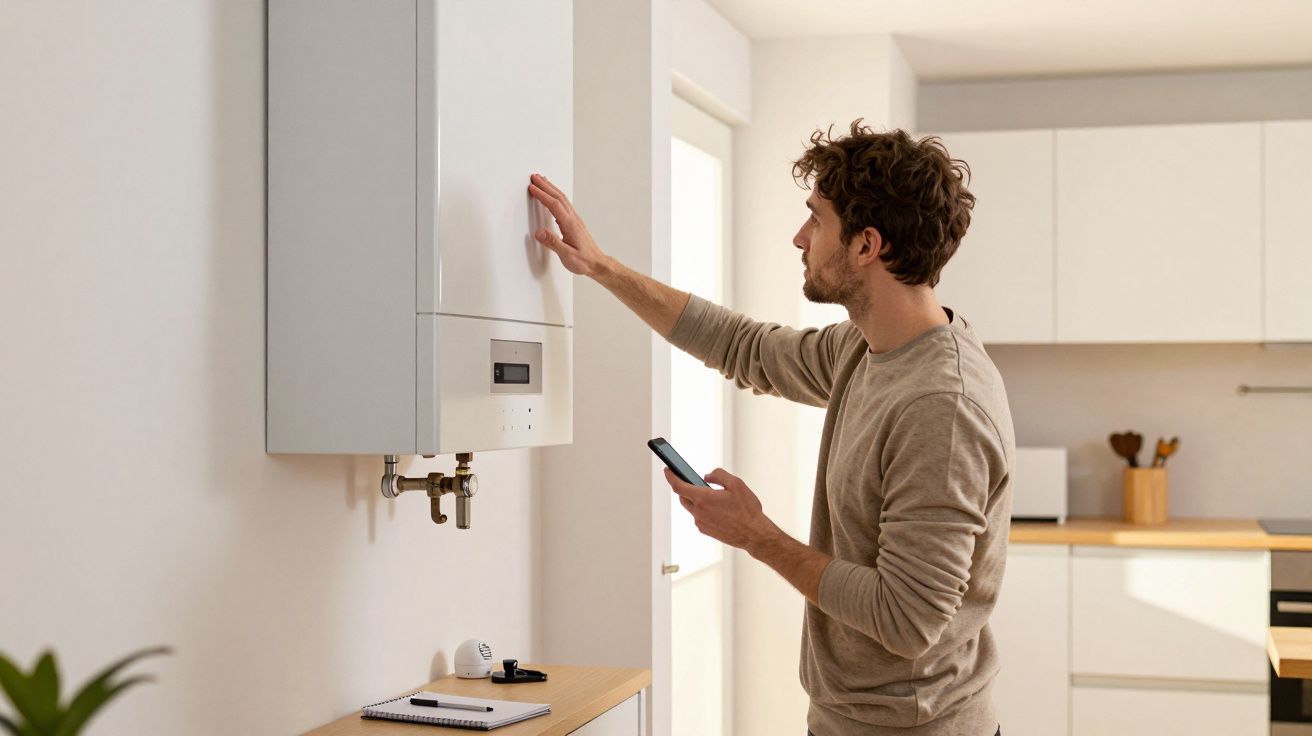
This is where system design meets controls. If you’ve got a heat pump, the flow temperature strategy matters even more: every unnecessary degree costs efficiency. If you’ve got a boiler, you still want weather compensation or at least sensible blending at the mixing valve.
The classic failure mode is simple: someone sets the heat source to a “safe” low number, the floor can’t deliver enough watts, and the homeowner keeps turning the thermostat up like it can create heat out of politeness.
4) Mixing valves, pumps and manifolds that don’t match the job
You can install beautiful pipework and still starve it hydraulically.
A few quiet culprits:
- A mixing valve that never opens properly, keeping UFH stuck at lukewarm.
- A pump that can’t provide the required head for the number of loops and their lengths.
- Manifolds without proper balancing, or balancing never done.
- Air trapped in loops, especially after refills or alterations, causing partial flow.
The tragedy is that all of these look the same to the homeowner: “The system’s on, but it’s not doing much.”
The control room problem: when thermostats fight the physics
Underfloor heating doesn’t like being treated like radiators. It’s slow to respond because the floor is a thermal store. When controls are set up for quick on/off behaviour, you get a weird dance: heat goes in late, heat comes out later, and the room overshoots or never settles.
This gets worse when zones are tiny or thermostats are placed in awkward spots. A thermostat on an internal wall near a sunny window will “think” the room is warm while the rest of the space feels cold. A towel rail on the same thermostat as the floor can create the illusion of comfort while the slab never really charges.
A lot of underfloor heating failures are, bluntly, control philosophies that don’t respect time.
A simple checklist that catches more than people expect
Before you assume the pipe in the floor has failed, check the boring stuff that actually breaks the experience:
- Confirm the heat source can supply the required flow temperature under load (not just on a mild day).
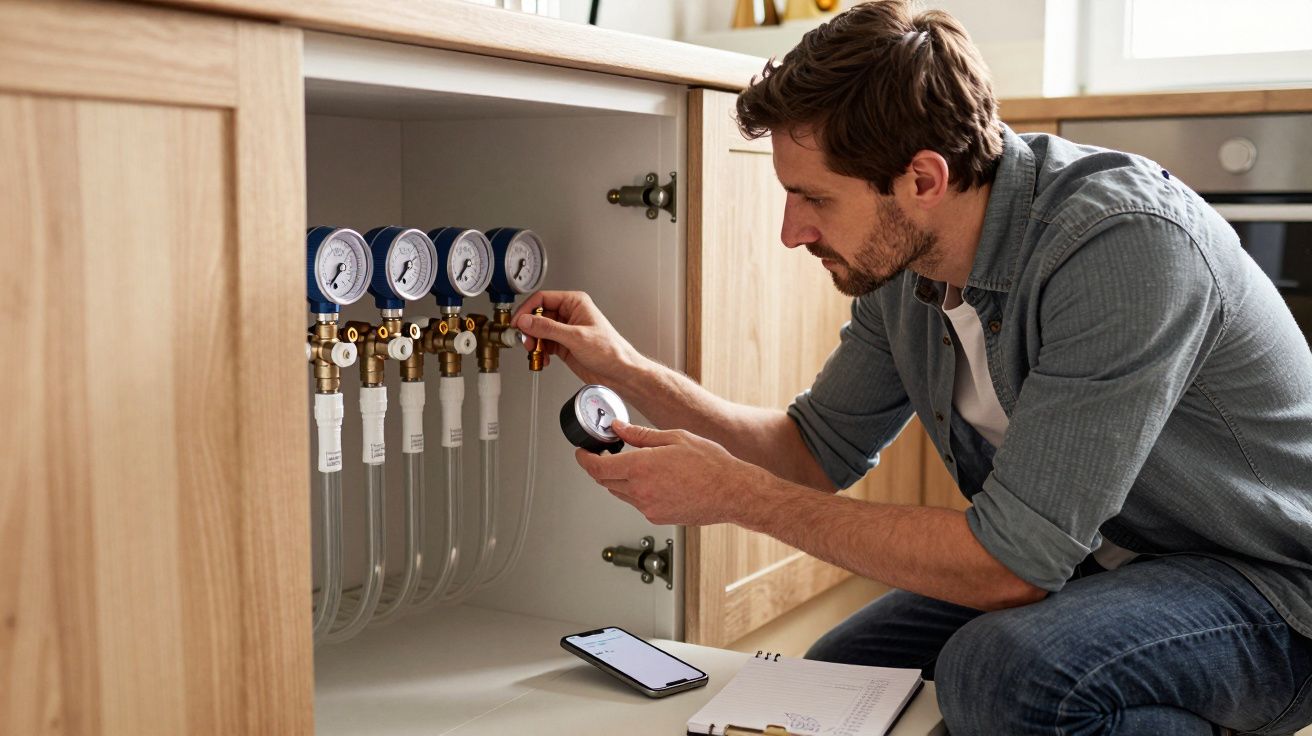
- Check manifold flow meters: are loops getting design flow rates?
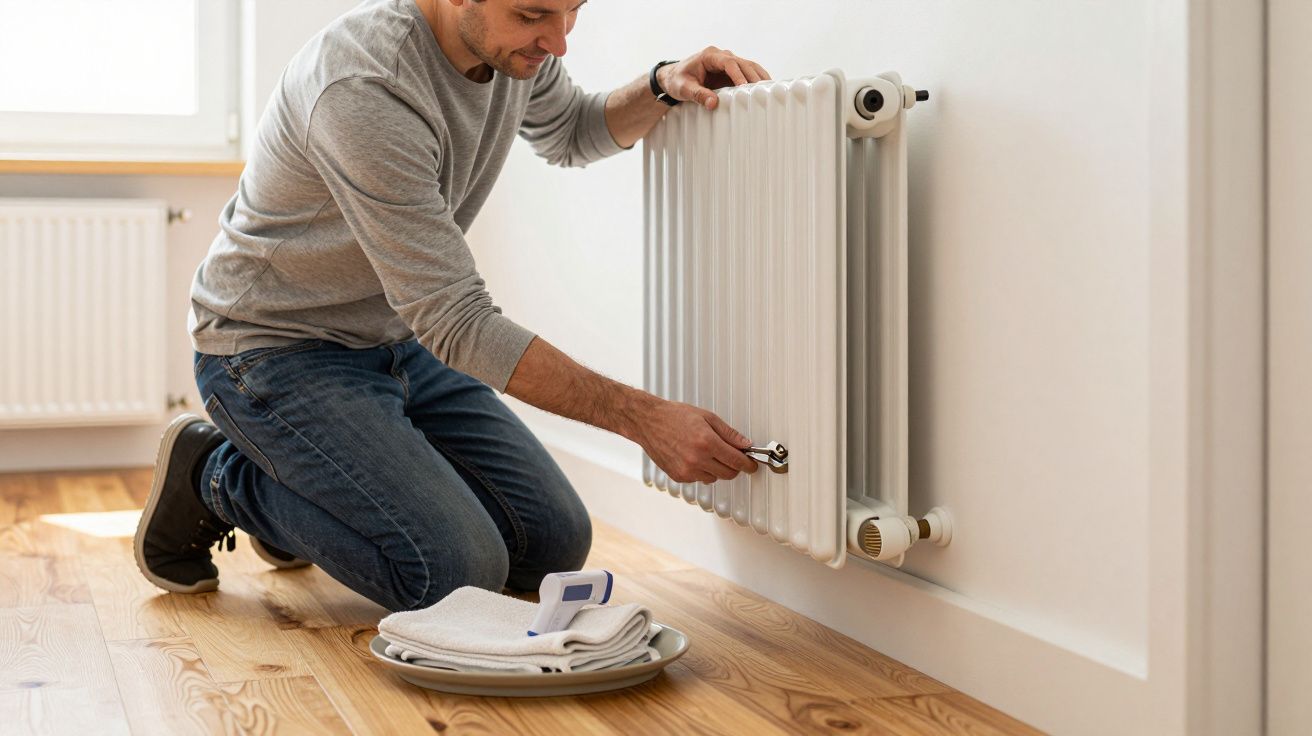
- Bleed air properly and re-check flows after.
- Look at loop lengths and pipe spacing against the room’s heat loss.
- Verify mixing valve behaviour and pump capability.
- Review thermostat placement and schedules for slow-response heating.
None of this is glamorous. It’s also where most “mystery failures” live.
The uncomfortable truth: the floor is usually innocent
Real pipe failures happen, but they’re not the default. In most homes, the plastic pipe buried in screed is the most reliable part of the whole arrangement. The fragile bits are elsewhere: assumptions, hydraulics, controls, commissioning.
If you take one thing from this, let it be this small reframe. When underfloor heating disappoints, don’t start with the floor. Start with what’s feeding it, what’s controlling it, and what it was designed to deliver.
Because the failure often started long before the first tile went down, in a place you never think to look: a design decision that sounded “close enough” at the time.
FAQ:
- Why does my underfloor heating feel cold even when it’s on? Underfloor heating is designed for low surface temperatures, so it may not feel “hot”. If the room also won’t reach setpoint, suspect low flow temperature, poor flow rates, long loops or an underestimated heat loss.
- Can long pipe loops really make that much difference? Yes. Longer loops increase pressure drop, reducing flow unless the pump can compensate. Low flow means low heat delivery, and the end of the loop can run noticeably cooler.
- Is it usually a fault in the floor pipework? Not usually. Buried pipe is typically reliable; issues more often come from mixing valves, pumps, balancing, air in the system, incorrect controls or mis-sized design.
- What’s the quickest thing to check at the manifold? Look at the flow meters and return temperatures. If some loops show very low or zero flow, you likely have air, a closed actuator, a balancing issue, or a pump/head mismatch.
- Does underfloor heating work differently with a heat pump? Yes. Heat pumps rely on low flow temperatures for good efficiency, so system design and commissioning (heat loss, emitters, flow rates, weather compensation) matter even more than with boilers.


Comments (0)
No comments yet. Be the first to comment!
Leave a Comment